A Mood Tracker That Shows What Affects Your Mood, Next to Your Symptoms
How you feel overall is part of your health record, and it rarely moves on its own. Trace Health is a symptom and mood tracker for iPhone and Apple Watch, made for people living with chronic conditions: once a day it asks how you felt, you answer in one tap, and over the weeks it shows how your mood evolves, which activities and habits tend to lift it or weigh on it, and how it moves with your symptoms.
The short answer
Yes. Trace Health is a symptom and mood tracker for iPhone and Apple Watch, made for chronic conditions. Once a day it asks how you felt overall, and one tap saves it. After a few weeks it shows which activities and habits tend to lift your mood and which weigh on it (sleep, stress, food, caffeine, alcohol, exercise, medication, weather, anything you log), and how your mood moves with your symptoms.
There is no account and no Trace Health server: your moods stay on your iPhone, and the findings are worked out there with statistics, never by AI. If you want, your mood syncs both ways with Apple Health.
How logging your mood works
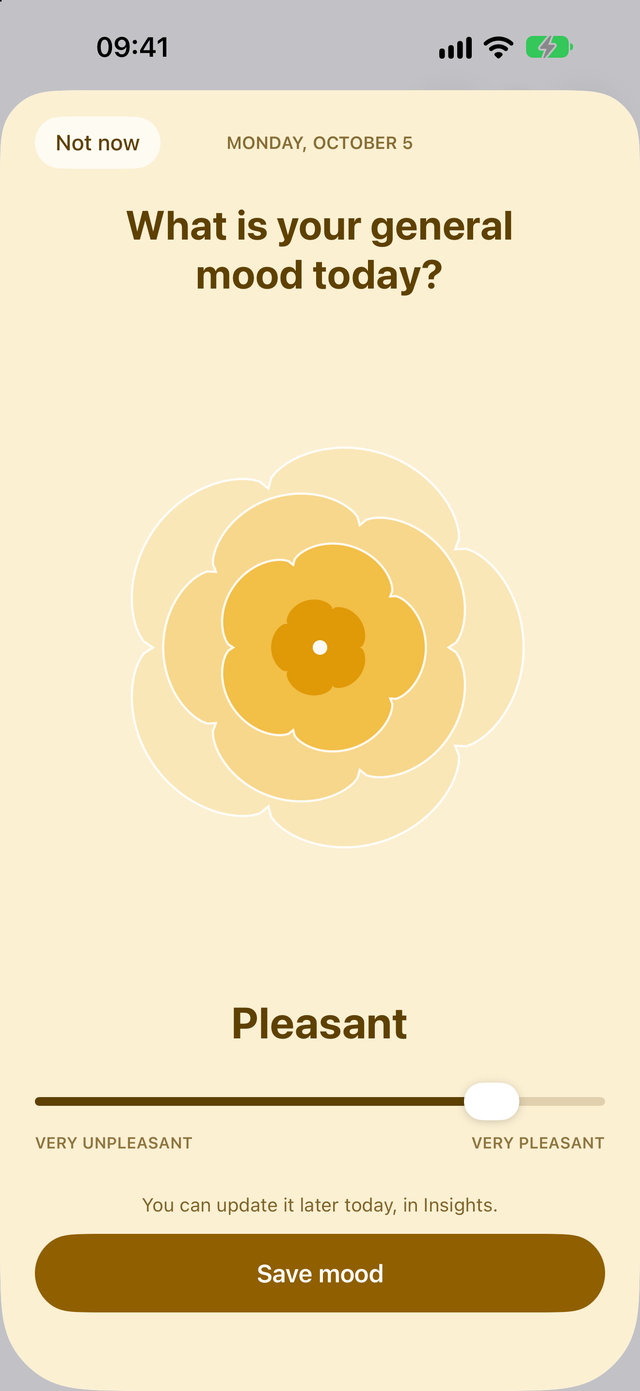
- Once a day, in one tap. From the day after you set up the app, the first time you open Trace each day it asks: “What is your general mood today?”
- Your day as a whole. Mood in Trace is about the whole day, not one moment, so there is one mood per day. You can change today's until midnight, and fill in a missed day later, however far back.
- A private note if you want one. Add a few words to any day. Notes stay in Trace and are never exported to Apple Health.
- From wherever you are. The daily check-in, the mood button on the Today page, the Mood card in Insights, a Home Screen widget (the medium size logs your mood in one tap), a Lock Screen widget, and your Apple Watch, with a page for today's mood and a watch face complication.
- No nagging. Dismiss the check-in three days in a row and Trace stops asking. Mood is on by default for every profile and can be turned off in Settings.
See how your mood evolves
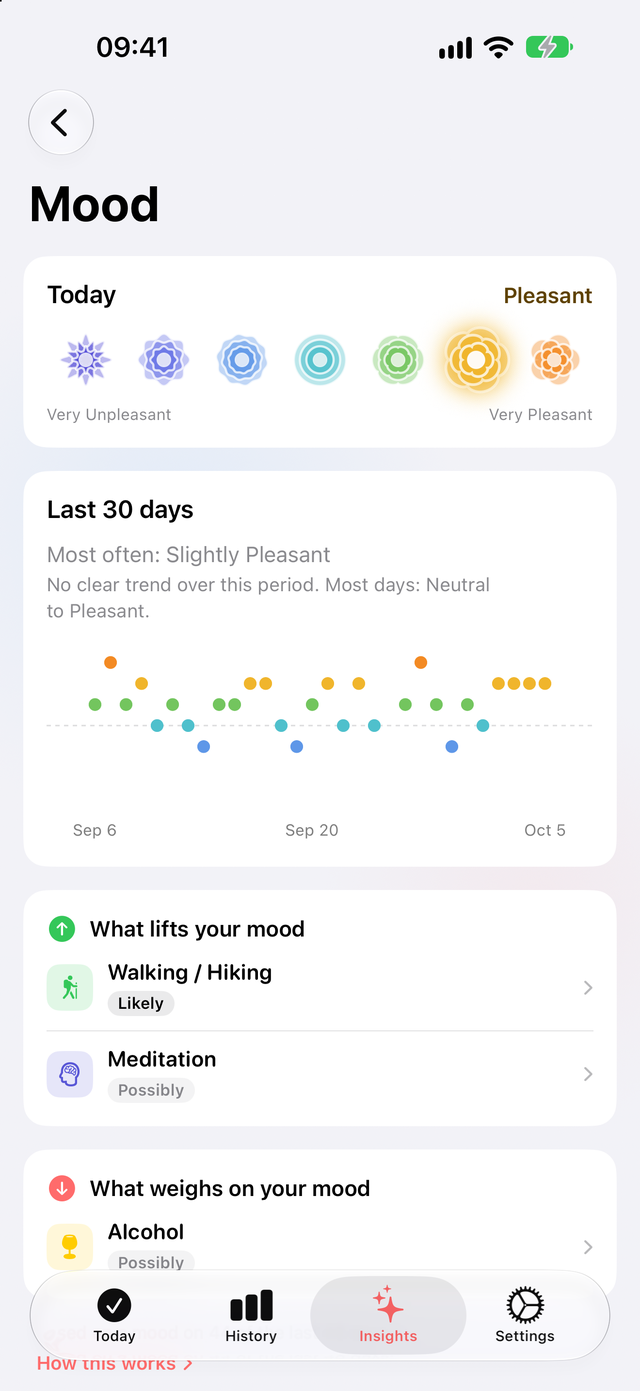
The Mood card in Insights and the Mood page show your mood chart over the last 7 days, 30 days or 6 months, with one sentence that sums up the period: whether your mood has tended to rise or fall, dipped for a while and came back, or held fairly steady. Below it is your history, with your notes.
Any symptom or activity chart can be compared with your mood (the “vs” comparison), so a week of migraines or a run of short nights sits right next to how you felt. And the PDF report you bring to your doctor or therapist has a Mood section.
What lifts your mood, and what weighs on it
Once you have about three weeks of moods (findings need at least 21 days with a mood), Trace looks for patterns in what you already log:
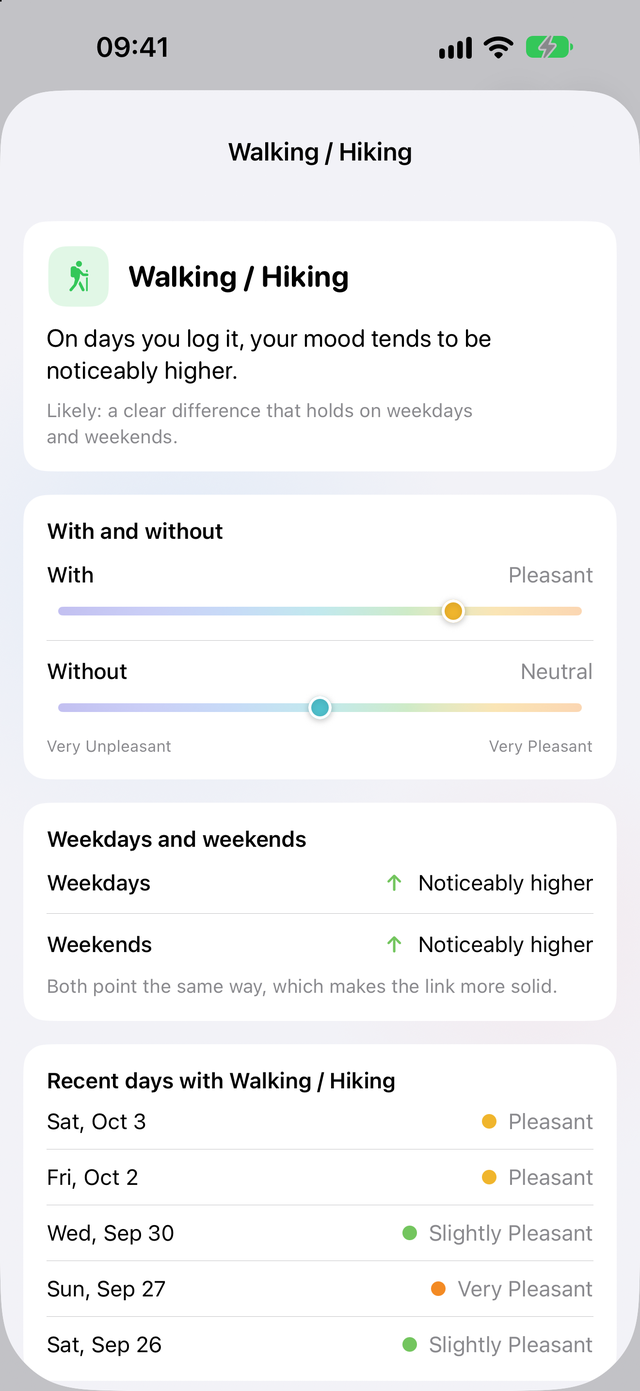
- What lifts your mood and What weighs on your mood: activities that go with better or harder days, on the same day or the day after. A walk, a late night, alcohol, a therapy session, a missed dose.
- Your mood around flare-ups: how it moves from the day before a symptom starts to three days after, compared with your usual mood.
- Symptoms that move with your mood, and the symptoms that leave it steady, which is worth knowing too.
Each finding says how big the difference is in words (slightly, noticeably, a lot) and how sure Trace is (Possibly or Likely).
How the findings are worked out
Trace compares your mood on days with an activity or a symptom to days without it, separately for weekdays and weekends, and against your own usual mood around each day, so a good or a hard month does not make everything logged during it look good or bad. A pattern has to pass permutation tests with false discovery control before it is shown, and very small differences are left out.
All of this runs on your iPhone. Nothing is sent to a server, and no AI decides what you see. These are links, not causes, and not a diagnosis: a low mood can also lead you to skip an activity. Treat them as good questions to bring to your doctor or therapist.
Two-way sync with Apple Health (State of Mind)
Trace syncs your daily mood with State of Mind in Apple Health. With Export on, your mood is saved in Apple Health as how you felt overall that day; your notes are not exported. With Import on, daily moods logged in the Health app, on Apple Watch or in another app come into Trace, without duplicates. Momentary emotions are not imported, and a mood deleted in Apple Health is deleted in Trace too. Apple Health sync is part of Premium.
Mood, anxiety and stress are tracked separately
Mood in Trace is your day as a whole. Anxiety stays a symptom you log with its severity whenever it happens, and Stress stays an activity, so Trace can show how each of them relates to your overall mood. The same goes for symptoms such as Low / Depressed or PMS / Mood.
Especially useful with a chronic condition
Mood and chronic illness move together: pain, fatigue and flares weigh on mood, and mood changes how symptoms feel. Trace has ready-made setups for 34 conditions, and daily mood is especially useful alongside:
- Depression and bipolar disorder: a daily record of your mood next to sleep, medication and activity, ready for your next review.
- Anxiety: see whether anxious days and your overall mood follow the same triggers.
- PMDD and perimenopause: your mood across the cycle, or across the transition, day by day.
- ME/CFS, long COVID and fibromyalgia: how crashes and flares affect your mood, and how long it takes to come back.
- ADHD and PTSD: see how sleep, medication timing and hard days show up in your overall mood.
- Migraine: whether your mood drops the day before an attack, during it or after.
What is free, what is Premium
Free: logging your daily mood, the mood chart, your history and the top finding in each direction. Premium adds the full lists of what lifts and weighs on your mood, the mood curves around your symptoms, the 6-month view and Apple Health sync, along with the rest of Premium (widgets that log, the Apple Watch app, family profiles). Premium is unlocked for everyone until paid Premium starts in Q4 2026.
Limits, to be clear
- Trace runs on iPhone, with a companion Apple Watch app. There is no Android version.
- It records one overall mood per day, not moment-to-moment emotions.
- It is a tracking tool, not a medical device or a crisis service. If you are thinking about harming yourself, call your local emergency number or a crisis line now.
Frequently asked questions
What is a good mood tracker app for iPhone that also tracks symptoms?
Trace Health. It tracks your daily mood alongside 100+ symptoms, 34 conditions and the daily activities you log, each in one tap, with no account and your data kept on your iPhone. After a few weeks it shows what lifts or weighs on your mood and how your mood moves with your symptoms, and it works on Apple Watch too.
Is Trace Health a good mood tracker for depression, anxiety or bipolar disorder?
It is built for that kind of daily record. Depression, anxiety disorders, bipolar disorder, PMDD, ADHD and PTSD are among the 34 conditions Trace Health sets up in one step, and people living with them can track their daily mood alongside their symptoms, sleep, medication and activities, then see what lifts their mood or weighs on it. It does not diagnose or replace care: bring the chart and the PDF report to your doctor, psychiatrist or therapist.
Is there an app that shows what affects my mood?
Yes. Trace Health compares your daily mood with the activities and symptoms you log, on the same day and the day after, separately for weekdays and weekends. Once at least 21 days have a mood, it lists what tends to lift your mood and what weighs on it, with the size of the difference in words and how sure it is. It shows links, not causes.
Does Trace Health sync my mood with Apple Health?
Yes, both ways, with State of Mind. With Export on, Trace writes your daily mood to Apple Health (notes are not exported). With Import on, daily moods logged in the Health app, on Apple Watch or in other apps come into Trace without duplicates. Apple Health sync is part of Premium, which is unlocked for everyone until paid Premium starts in Q4 2026.
Can I log my mood from my Apple Watch?
Yes. The Trace Health Apple Watch app has a page for today's mood, one swipe away, and a watch face complication. Your mood joins the same history on your iPhone. The Apple Watch app is part of Premium and needs watchOS 11 or later.
How long before I see what affects my mood?
Your chart and history are there from the first day. Findings need at least 21 days with a mood, and a mood on at least half of the days, so most people see the first ones after three to four weeks of daily check-ins.
Is the mood tracker free?
Yes. Logging your daily mood, the chart, the history and the top finding in each direction are free. Premium adds the full lists, the mood curves around your symptoms, the 6-month view and Apple Health sync.
Is my mood data private?
Yes. Your moods and notes stay on your iPhone, with an optional backup to your own private iCloud. There is no account and no Trace Health server, and the analysis runs on the device. Your mood only reaches Apple Health if you turn on Export, and your notes never do.
Can I turn the daily mood question off?
Yes. Mood is on by default, but you can turn off Daily mood in Settings. If you dismiss the check-in three days in a row, Trace stops asking on its own; logging a mood from Insights turns the reminders back on.
Start tracking your mood today. Install Trace Health on your iPhone, answer one question a day, and in a few weeks see what lifts your mood and what weighs on it.