Track Impulsivity
Impulsivity means acting on an urge before you have had time to think it through: buying something you cannot afford, eating or drinking more than you meant to, sending the message, quitting the job, saying the thing you regret a minute later. Everyone does this sometimes. For people with ADHD, borderline personality disorder or bipolar disorder it can be frequent and costly, and it rises and falls with sleep, stress and mood. Tracking it as a state, rather than judging it as a flaw, is how those links become visible.
Why track this symptom?
- See whether impulsive days follow short nights, alcohol, conflict or a build-up of stress.
- Notice a rise in urges early, which in bipolar disorder can be a warning sign of hypomania.
- Give your therapist or psychiatrist a dated record instead of a guilty, half-remembered account.
How Trace Health helps
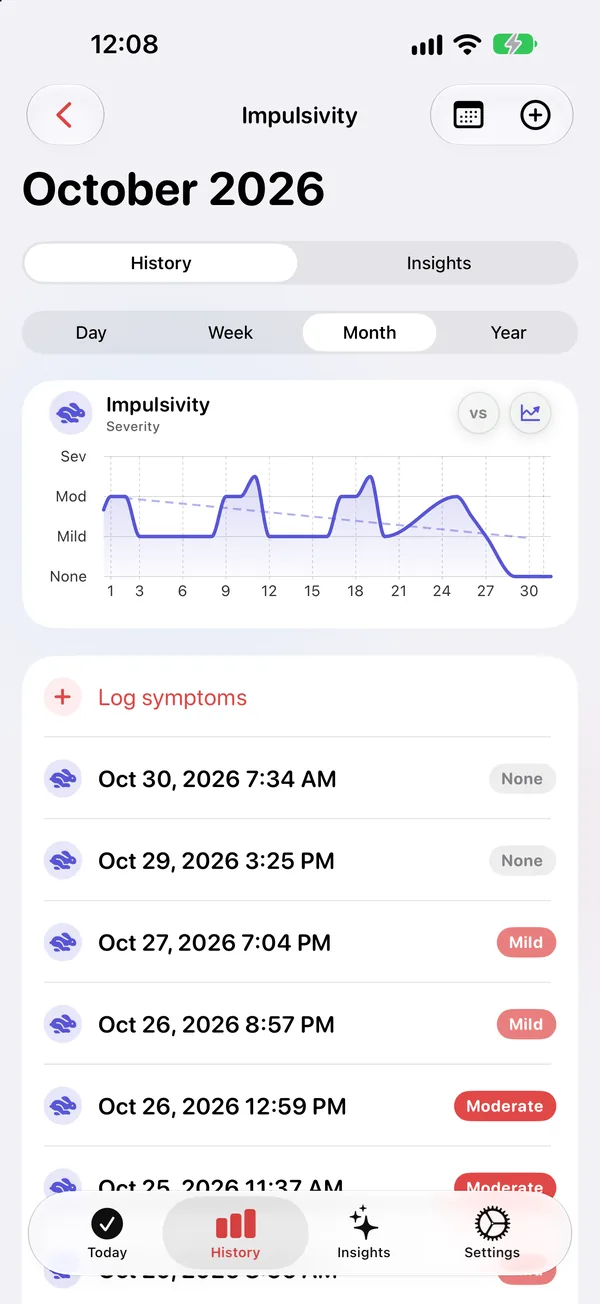
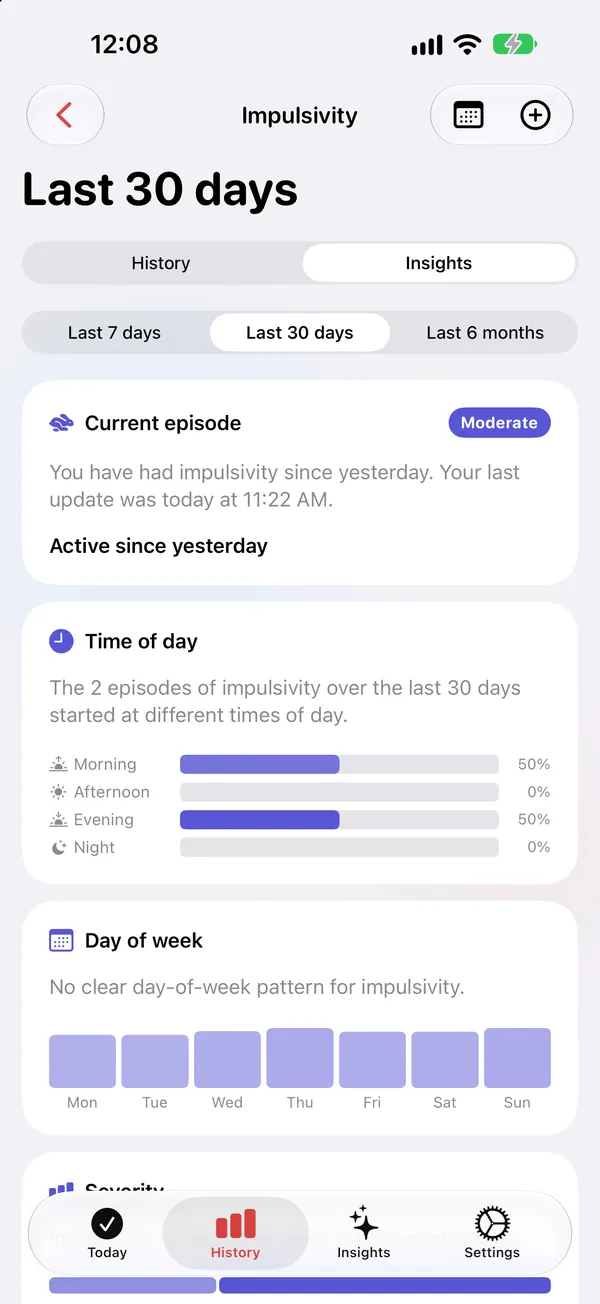
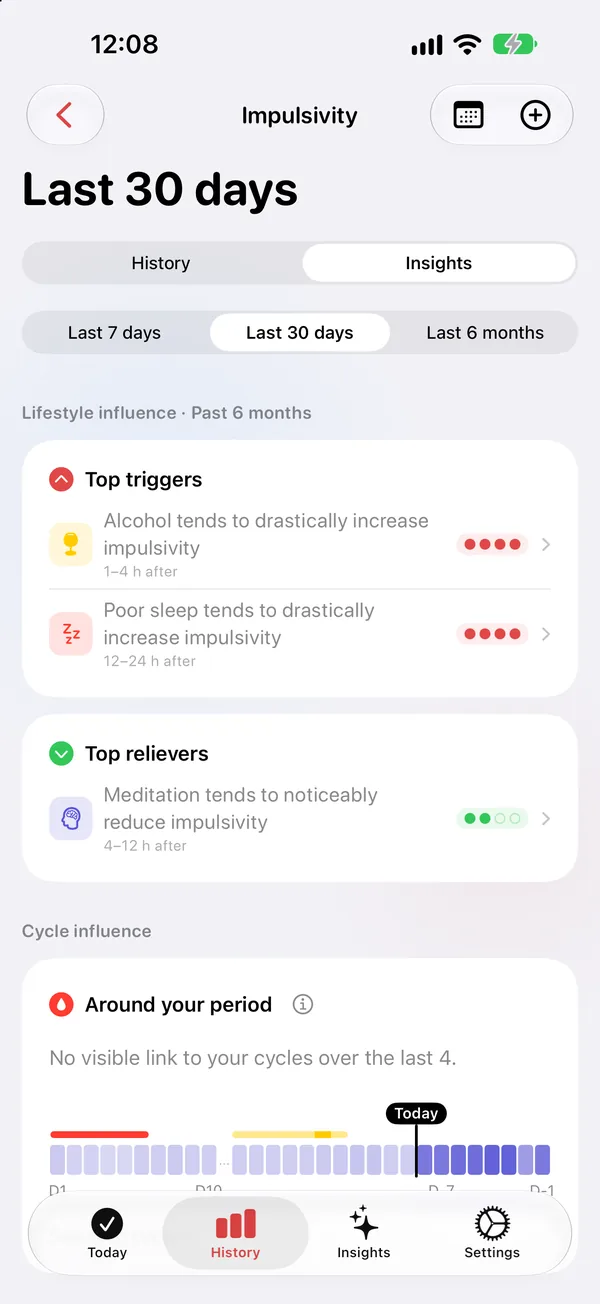
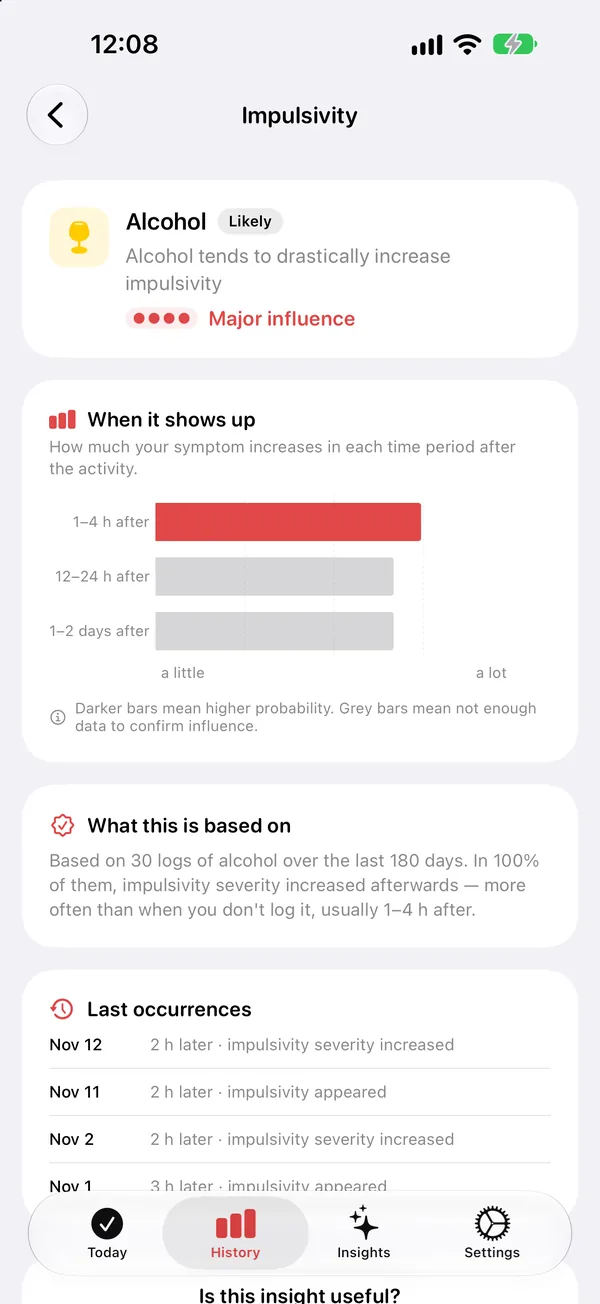
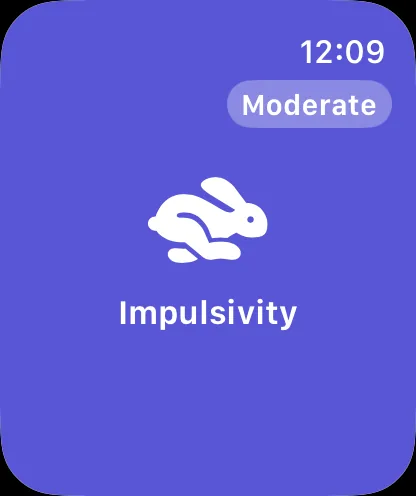
You do not have to write down what you did. In Trace Health you tap Impulsivity and choose mild, moderate or severe, which takes less effort than the urge itself. Add a private note only if you want to. Log sleep, stress, alcohol, conflict and medication on the same timeline, and over weeks the conditions that make urges harder to resist start to show.
How it looks in Trace Health
Example screens with sample data, the way they look after a few weeks of tracking.
Common Causes
Impulsivity is a core feature of ADHD and one of the main symptom groups of borderline personality disorder, where it often follows intense emotion. It rises during hypomania and mania in bipolar disorder, and it travels with substance use, which both lowers inhibition and becomes an impulsive act itself. Sleep deprivation reliably reduces impulse control in everyone, as do acute stress, hunger and alcohol. Some medicines can cause impulse-control problems, most notably the dopamine agonists used for Parkinson's disease and restless legs, which are linked to compulsive gambling, shopping, eating and sexual behaviour. Less commonly, new impulsivity in later life can reflect a neurological change, such as frontotemporal dementia, a head injury or a stroke, and deserves assessment.
When to See a Doctor
Get help immediately if you have urges to harm yourself or someone else, or thoughts of suicide: call your emergency number or a crisis line, or go to an emergency department. Contact your mental health team or doctor soon if impulsivity has risen sharply, especially with much less sleep, racing thoughts or an unusually high or irritable mood. Mention it promptly if it started after a new medication, or if it is new in later life or after a head injury. Book a routine appointment if impulsive spending, eating, drinking or decisions are harming your finances, health or relationships, so you can discuss assessment and treatment.
Frequently asked questions
Is impulsivity a symptom of ADHD?
Yes. Impulsivity is one of the core features of ADHD, alongside inattention and hyperactivity. It can look like interrupting, blurting out answers, struggling to wait, making snap decisions or spending on impulse, and it often comes with emotional impulsivity, where frustration turns into a reaction faster than you can stop it. In adults it is often less visible than in children but no less disruptive. It typically worsens with poor sleep, stress and missed medication, and improves for many people with treatment. Logging Impulsivity alongside sleep, stress and your ADHD medication shows how much of it moves with those factors, which is useful for both you and your prescriber.
How is impulsivity in BPD different from ADHD?
There is a lot of overlap, and the two conditions often occur together, but the usual pattern differs. In ADHD, impulsivity tends to be fairly constant, part of how attention and self-control work every day. In borderline personality disorder, impulsive acts more often follow an emotional surge: a rejection, a conflict or a feeling of emptiness becomes unbearable, and the impulsive act brings brief relief. That is why therapies such as DBT focus on noticing the emotion and the urge before acting. A log can help tell them apart. If your impulsive days line up with Emotional Overwhelm and Conflict entries, the emotional route is likely. If they are steady regardless of mood, attention may be the bigger factor.
Can impulsivity be a sign of a bipolar mood episode?
It can. During hypomania and mania, people often spend heavily, take risks, start projects on impulse, drive fast or make decisions they would not usually make, typically together with less need for sleep, racing thoughts and a high or irritable mood. A rise in impulsivity after several short nights is one of the early warning signs many people with bipolar disorder learn to watch for with their care team. Tracking it daily, alongside Mania / High, Insomnia and Irritability, makes that early signal easier to see. If you notice the pattern, contact your care team early, since acting at the first signs is usually far easier than acting once an episode is established.
When should I get help for impulsive behaviour?
Seek help if impulsive acts are causing real harm: debts, lost jobs or relationships, unsafe sex, dangerous driving, or drinking and drug use you cannot control. Speak to your doctor or mental health team promptly if impulsivity is new or has suddenly increased, especially with little need for sleep, racing thoughts or a very high or irritable mood, which may signal hypomania or mania. If impulsivity started after a new medicine, mention it, because some drugs, including dopamine agonists, can cause compulsive gambling, shopping or eating. If you have urges to hurt yourself, or thoughts of suicide, contact a crisis line or your emergency number, or go to an emergency department straight away.
What should I track for impulsivity in therapy?
Most therapists find a short, consistent record far more useful than a detailed one. Log Impulsivity with a severity whenever you notice a strong urge, whether or not you acted on it, and add the context only if it helps: stress, conflict, alcohol, poor sleep or feeling overwhelmed. Many people keep the details of what they did out of the app and discuss them in session instead. Over a few weeks the log shows when urges peak and what reliably comes before them, which is the starting point for skills work in CBT or DBT. Trace Health can export the entries as a dated PDF if you want to share them with your therapist or psychiatrist.
Your health data stays on your iPhone.
No account. Private. No personal information is ever requested. Your health data stays on your iPhone by default. A backup option to your private iCloud is available. Trace Health never sells your data.
What people say
Rated 4.7 out of 5 from 81+ ratings on the App Store.
- “A rare app that offers health tracking this comprehensive and synced with Health.” (gmorph3us, France)
- “I’ve been using this for almost a year, I have made some suggestions which they’d have deployed even better than what I suggested. Every release gets better couldn’t be more pleased.” (Rlevs, United States)
Read the complete guide: How to Track Impulsivity Without Judging Yourself →