Track Daytime Sleepiness
Daytime sleepiness is the pull towards sleep when you should be awake: eyelids drooping while you read, nodding off in front of the television, fighting to stay alert in a meeting or as a passenger. It is not the same as fatigue, which is a lack of energy that rest does not fix. Excessive sleepiness usually has a cause, from simply not sleeping enough to sleep apnoea, medication or a condition such as Parkinson's, and a record of when it hits is often what points to that cause.
Why track this symptom?
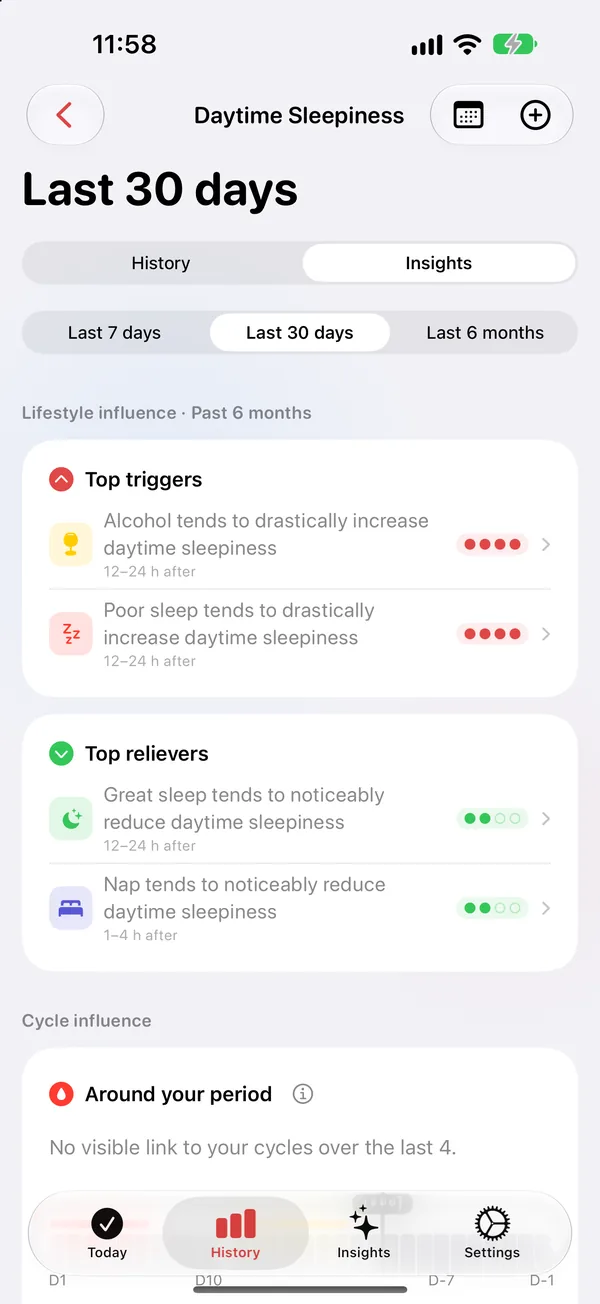
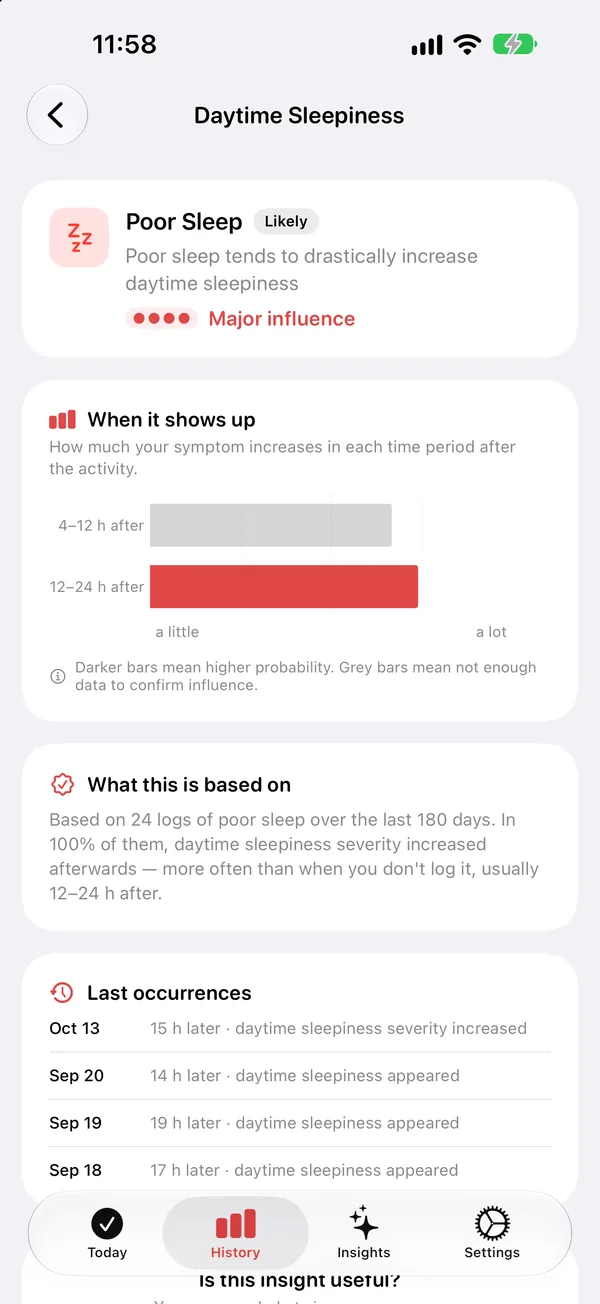
- Link sleepy afternoons to the nights before them, to naps, and to how much caffeine you needed.
- Spot sleepiness that began after a new medicine or a dose change, a common and fixable cause.
- Show your clinician how often you doze and when, the detail behind sleep apnoea or narcolepsy tests.
How Trace Health helps
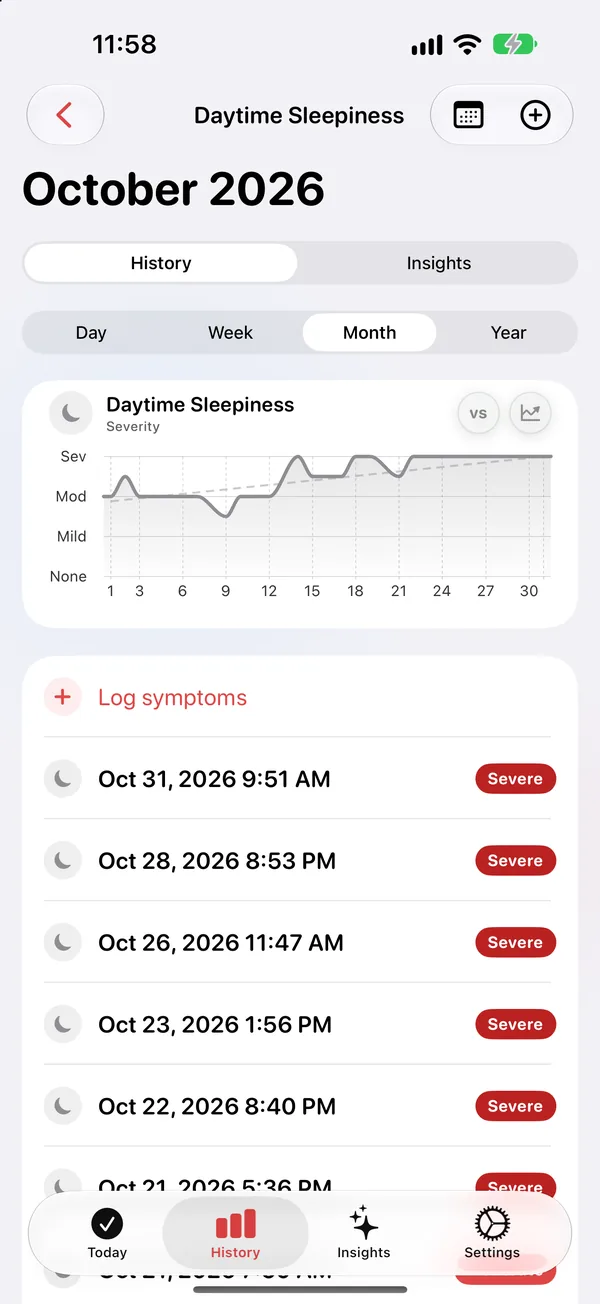
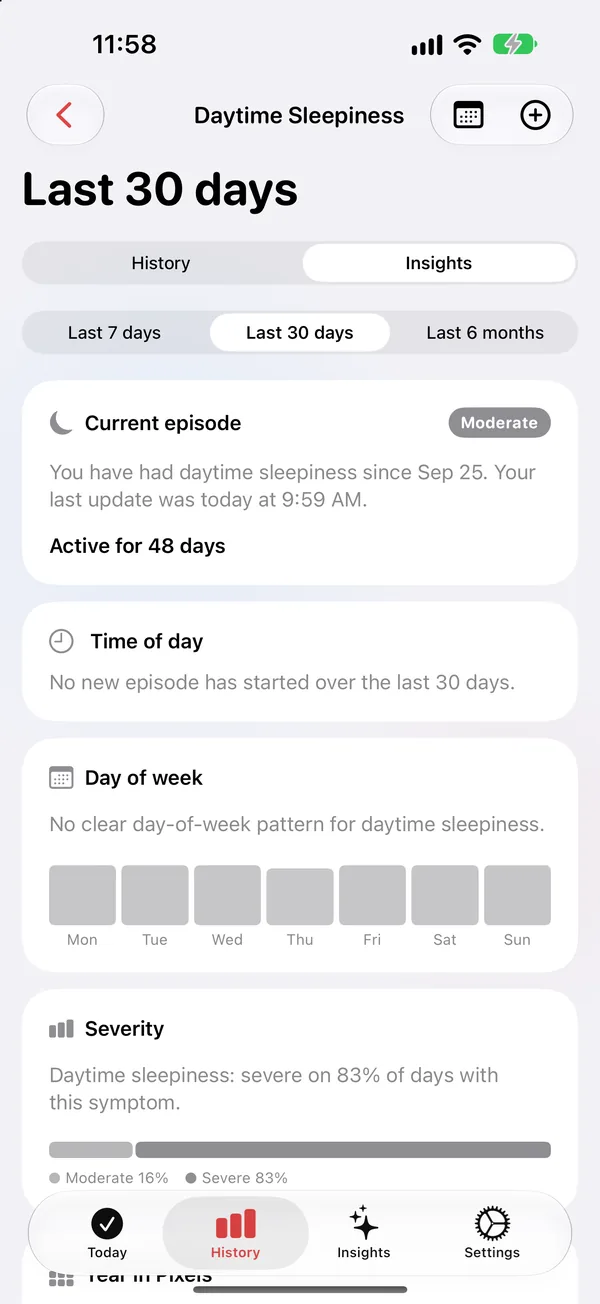
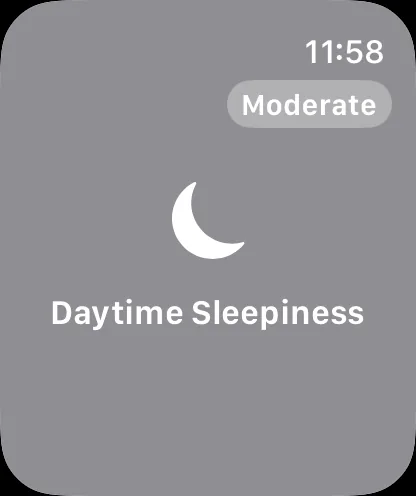
Sleepiness comes in waves, often at the same time each day, so a quick log at the moment it hits is the most accurate. In Trace Health you tap Daytime Sleepiness and choose mild, moderate or severe. Log naps, coffee, sleep quality and medications on the same timeline, and with Apple Health sync on (Premium), Trace writes the entry to Health as Sleep Changes.
How it looks in Trace Health
Example screens with sample data, the way they look after a few weeks of tracking.
Common Causes
The most common cause of daytime sleepiness is simply not getting enough sleep, whether from long working hours, shift work, a new baby or a habit of late nights. Insomnia can cause it too, though many people with insomnia feel tired and wired rather than sleepy. Obstructive sleep apnoea is the most important medical cause to consider, particularly with snoring, a larger neck, high blood pressure or weight gain. Medicines are another frequent cause, including sedating antihistamines, some antidepressants, antipsychotics, anti-epileptic drugs, opioids and the dopamine agonists used in Parkinson's and restless legs. Parkinson's disease itself often brings sleepiness. Less common causes include narcolepsy, idiopathic hypersomnia, an underactive thyroid, depression, and circadian rhythm disorders, where the body clock runs later than the day.
When to See a Doctor
Stop driving or operating machinery and seek advice promptly if you are falling asleep at the wheel or at work where safety is at stake. Get urgent care if sleepiness comes on suddenly with confusion, a severe headache, slurred speech or weakness, or after a head injury. Book a routine appointment if you regularly doze without meaning to, if snoring or breathing pauses have been noticed at night, if sleepiness started after a new medicine, or if it comes with low mood, weight gain or feeling cold, which can suggest thyroid problems. Your doctor may suggest a sleep diary, blood tests or a referral for a sleep study.
Frequently asked questions
What is the difference between daytime sleepiness and fatigue?
Sleepiness is a drive towards sleep: given a quiet moment you would doze, and a nap usually helps, at least briefly. Fatigue is exhaustion, heaviness or lack of energy, where you may want to lie down but cannot actually sleep, and rest does not restore you. The distinction matters because they point in different directions. Sleepiness suggests too little or poor quality sleep, sleep apnoea, narcolepsy or sedating medication, while fatigue is more typical of depression, anaemia, thyroid disease, ME/CFS, long COVID and many chronic illnesses. Many people have both. Logging Daytime Sleepiness and Fatigue as separate symptoms helps you and your clinician see which one dominates.
Why am I so sleepy during the day even after a full night in bed?
Time in bed is not the same as good sleep. Obstructive sleep apnoea, where the airway repeatedly narrows during sleep, fragments the night without fully waking you, and its hallmarks are loud snoring, pauses in breathing noticed by a partner, morning headaches and unrefreshing sleep. Restless legs and periodic limb movements can do the same. Sedating medicines, including some antihistamines, antidepressants, pain relievers and dopamine agonists, are common causes, as are alcohol in the evening and an irregular sleep schedule. Depression and an underactive thyroid can also cause sleepiness. If your sleep looks long enough and you are still dozing during the day, that is worth discussing with your doctor.
Is it normal to feel sleepy after lunch?
A mild dip in alertness in the early afternoon is normal. It is part of the body clock and happens whether or not you eat, though a large, carbohydrate-heavy meal can deepen it. What is not normal is falling asleep unintentionally, nodding off in conversations, at your desk, or when stopped at traffic lights, or needing a nap every day to function. Clinicians often use the Epworth Sleepiness Scale, which asks how likely you are to doze in eight everyday situations, to judge whether sleepiness is excessive. Logging the time and severity of each sleepy spell, along with your meals and naps, shows whether yours is an ordinary dip or something that deserves a closer look.
When is daytime sleepiness a reason to see a doctor?
See your doctor if you regularly fall asleep without meaning to, if sleepiness affects your work or relationships, or if it comes with loud snoring, gasping or pauses in breathing at night, which suggest sleep apnoea. Mention it promptly if it started after a new medicine, or if you have Parkinson's and take a dopamine agonist, since sudden sleep attacks are a known side effect. Sudden muscle weakness triggered by laughter or strong emotion, vivid dreams as you fall asleep or wake, or being unable to move on waking can point to narcolepsy. If you feel sleepy while driving, stop driving and get advice: drowsy driving is dangerous, and some sleep disorders must be reported to the licensing authority.
What should I log to help my doctor investigate sleepiness?
Two to four weeks of entries give a clinician much more than a single answer in clinic. Log each sleepy spell with its severity and time, along with naps, how the previous night felt, caffeine and alcohol. Record any medication changes. If you share a bed, ask your partner whether you snore or stop breathing and note it down. Many sleep clinics also ask for a sleep diary of bedtimes and wake times, which fits naturally alongside these entries. Trace Health puts all of this on one timeline and exports it as a dated PDF report, which makes it easier to decide whether a sleep study or a medication change is the next step.
Your health data stays on your iPhone.
No account. Private. No personal information is ever requested. Your health data stays on your iPhone by default. A backup option to your private iCloud is available. Trace Health never sells your data.
What people say
Rated 4.7 out of 5 from 81+ ratings on the App Store.
- “Ok so I try so hard to track symptoms but apple health doesn’t have a widget for that and it’s kind of a pain to track down every little thing… Now this app!!!! Everything is right there, there’s widgets, it’s fast and simple and syncs! I freaking love this app! I’m still playing with it so I haven’t seen if it has a “how are you feeling right now” feature but it is everything I have ever wanted the symptoms on health to be!” (grofica82, United States)
- “This has given me a great tool to discuss my health issues with my doctor” (WVa Smitty, United States)
Read the complete guide: How to Track Excessive Daytime Sleepiness →