Track Restless Legs
Restless legs syndrome, also called Willis-Ekbom disease, is an urge to move your legs that comes with sensations people describe as crawling, pulling, tingling, fizzing or a deep ache. It starts or worsens when you sit or lie still, eases while you walk or stretch, and is usually at its worst in the evening and at night, which is why it so often turns into a sleep problem. Because it comes and goes, a dated record of when it strikes and what came before it is worth far more than a description from memory.
Why track this symptom?
- See whether caffeine, alcohol, nicotine or a late meal reliably comes before a bad night of legs.
- Notice if symptoms started or worsened after a new medicine, a pregnancy or a drop in iron.
- Give your clinician dated nights and severity, the evidence needed to test ferritin or adjust treatment.
How Trace Health helps
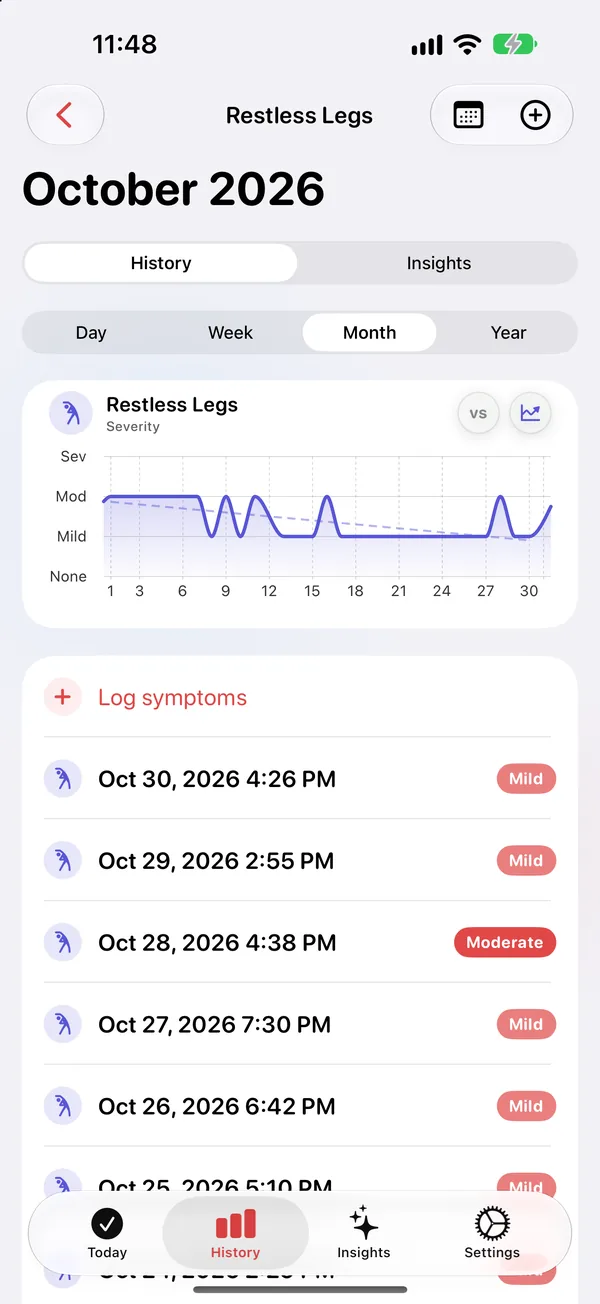
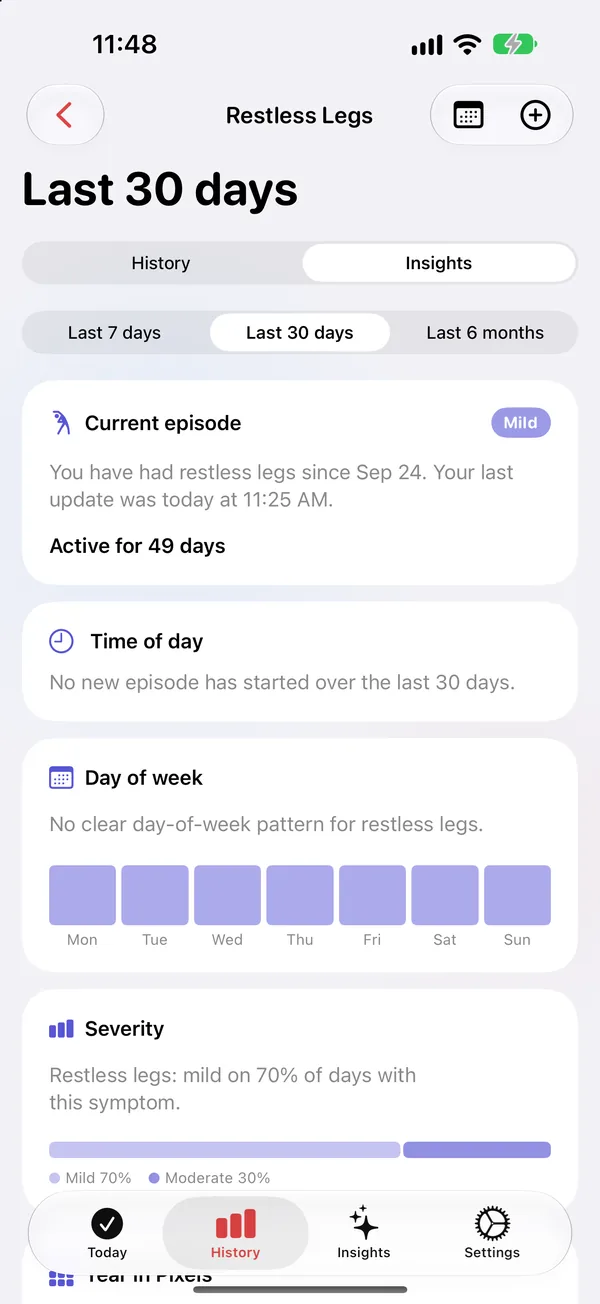
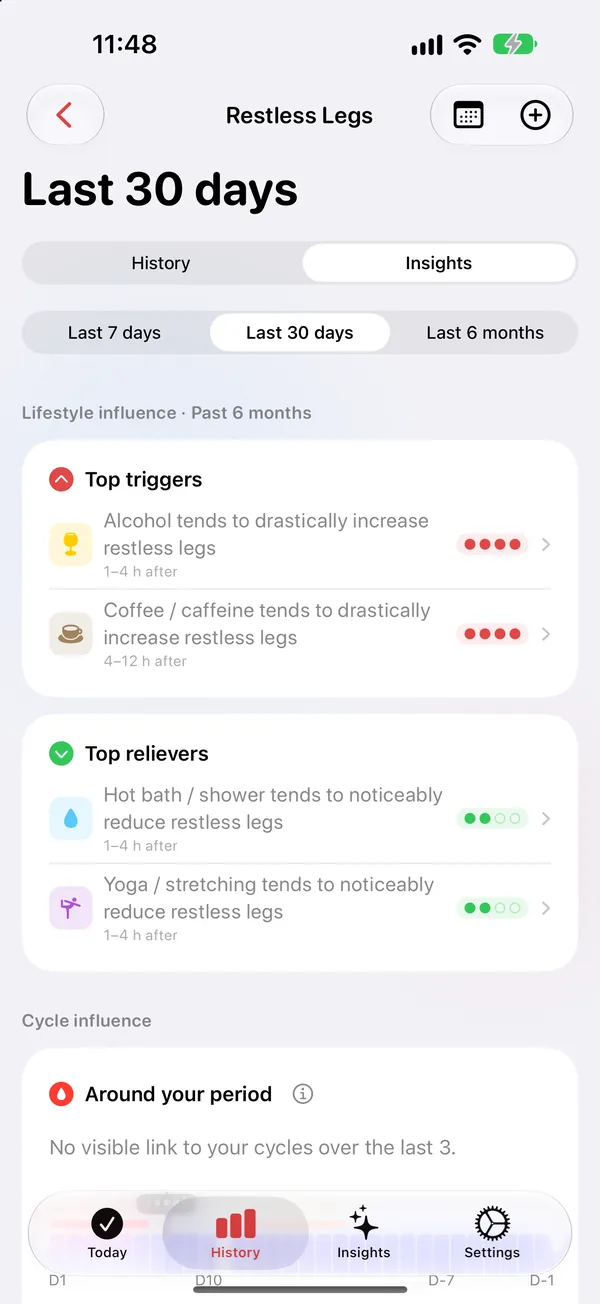
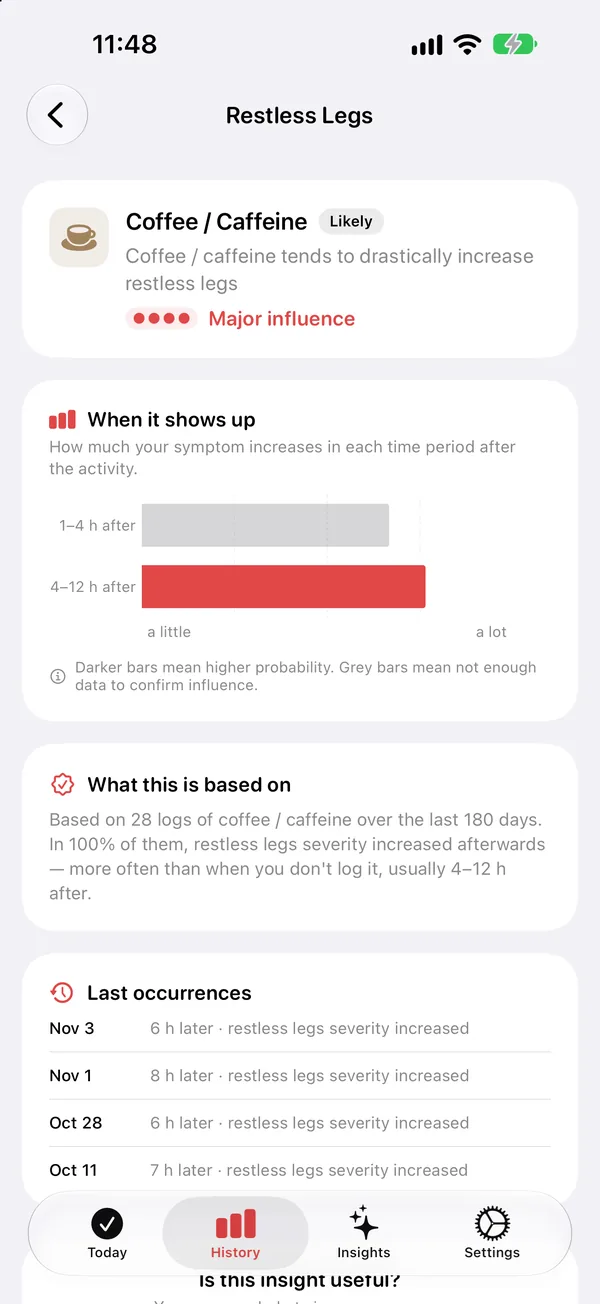
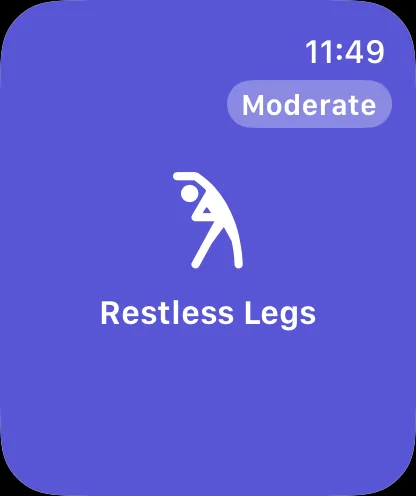
Restless legs strikes when you are trying to rest, often in bed, so logging has to take seconds. In Trace Health you tap Restless Legs, choose mild, moderate or severe, and mark it gone when it settles. Log coffee, alcohol, exercise, supplements and medications on the same timeline, and the pattern behind your worst evenings becomes visible within a few weeks.
How it looks in Trace Health
Example screens with sample data, the way they look after a few weeks of tracking.
Common Causes
Most restless legs is primary, meaning it has no single underlying cause; it often runs in families and tends to begin earlier in life when it does. Secondary restless legs has an identifiable driver, and the most common is iron deficiency, including low ferritin with a normal blood count. Pregnancy is another frequent cause, particularly in the third trimester, and it usually settles within weeks of giving birth. Chronic kidney disease, especially in people on dialysis, and peripheral neuropathy, for example from diabetes, are well recognised causes. It is also more common in multiple sclerosis and Parkinson's disease. Many medicines can trigger or worsen it, including sedating antihistamines, several antidepressants, antipsychotics and some anti-sickness drugs such as metoclopramide. Caffeine, alcohol, nicotine and sleep deprivation make symptoms worse in many people.
When to See a Doctor
Seek urgent care if leg symptoms come with sudden weakness, loss of feeling, back pain with numbness around the groin, or new problems controlling your bladder or bowels, and get same-day help for one calf that is swollen, hot and painful, which can be a blood clot. Book a routine appointment if restless legs disturbs your sleep on several nights a week, affects your mood or work, started in pregnancy or after a new medication, or comes with tiredness, breathlessness or pale skin that could mean low iron. If you are already on treatment and symptoms start earlier in the day or spread, ask for a review.
Frequently asked questions
Why are my restless legs worse at night?
Restless legs follows a daily rhythm: symptoms are typically lowest in the morning and peak between late evening and the early hours, partly because dopamine activity in the brain falls at night. Inactivity adds to it, so the moment you sit on the sofa or lie down is often when the urge begins. Long car journeys, flights and cinema seats can trigger it during the day for the same reason. To see your own rhythm, log each episode with its severity and note the setting, such as lying in bed or sitting after dinner. Over a few weeks the times cluster, and you can see whether an evening walk, a stretch or a later bedtime shifts them.
Can low iron cause restless legs?
Yes, low iron is one of the best established causes. The brain needs iron to make dopamine, and people with restless legs often have low iron in the brain even when their blood count is normal. That is why clinicians usually check ferritin, the iron storage protein, and many guidelines treat a ferritin below about 75 micrograms per litre as worth correcting in restless legs, a higher bar than for anaemia. Iron supplements should only be taken after a blood test and on medical advice, because too much iron is harmful. If you start iron, log it as a supplement and keep logging your legs: improvement tends to take several weeks to months, and a record shows whether it happened.
What is the difference between restless legs and leg cramps?
A cramp is a sudden, painful and visible tightening of a muscle, usually the calf or foot, that lasts seconds to minutes and eases when you stretch it. Restless legs is not a contraction at all: it is an uncomfortable sensation deep in the legs together with an urge to move, which is relieved while you keep moving and returns as soon as you stop. Some people also have periodic limb movements, brief jerks of the legs during sleep that a bed partner notices more than the sleeper does. Nerve pain from neuropathy can feel similar but is usually burning or numb and not eased by walking. Logging which of these you have, and when, helps your clinician tell them apart.
When should I see a doctor about restless legs?
See your doctor if restless legs disturbs your sleep more than a couple of nights a week, if it is affecting your mood or concentration, or if it started during pregnancy, after a new medicine, or alongside tiredness that could suggest low iron. Ask for an earlier review if you are already on treatment and symptoms are starting earlier in the day, spreading to your arms or getting more intense, because that can be augmentation, a recognised effect of dopamine-based medicines that needs a change of plan rather than a higher dose. Seek prompt care if leg symptoms come with weakness, numbness that does not go away, a swollen painful calf, or problems with your bladder or bowels.
What should I track to help my doctor treat restless legs?
Bring a few weeks of nights, not a summary. Log each episode with its severity and roughly when it started, so the clinician can see how many nights a week are affected and whether it begins earlier than it used to. Log caffeine, alcohol, nicotine and exercise on the same days, and any medicine changes, especially antihistamines, antidepressants or anti-sickness drugs, which commonly worsen restless legs. Add iron or other supplements when you take them. Trace Health turns those entries into a dated PDF report, which makes it easier to decide on blood tests, medication changes or a referral to a sleep specialist.
Your health data stays on your iPhone.
No account. Private. No personal information is ever requested. Your health data stays on your iPhone by default. A backup option to your private iCloud is available. Trace Health never sells your data.
What people say
Rated 4.7 out of 5 from 81+ ratings on the App Store.
- “About a month ago, I did a scan of the App Store to see if there was any new apps for symptom tracking and I found Trace Health. It had what I was looking for, but missing some minor features. I decided to give it a shot and I was really pleased with it, it worked in the way I wanted it. And the biggest plus was a super dedicated developer that keeps adding features that I was wondering about at a super fast pace. I can’t recommend Trace Health high enough!!!” (redferret2001, United States)
- “This is what I was looking for in a symptom tracking app. I like the ability to adjust severity and check in when a symptom has resolved itself.” (Missyfro, United States)
Read the complete guide: How to Track Restless Legs Syndrome →