Track Insomnia, Your Nights and the Days After Them
Insomnia is more than a bad night. The NHS describes it as regularly finding it hard to fall asleep, waking several times during the night or too early, lying awake, and still feeling tired after waking, with the day after paying for it in irritability, poor concentration and low energy. It is common, it tends to persist once worry and habits form around it, and it is very treatable. The treatment with the best evidence, cognitive behavioural therapy for insomnia (CBT-I), starts with a record of your nights and days. A one-tap log gives you that record without paperwork, and shows which habits, worries and symptoms keep your sleep broken.
What to track when you have insomnia
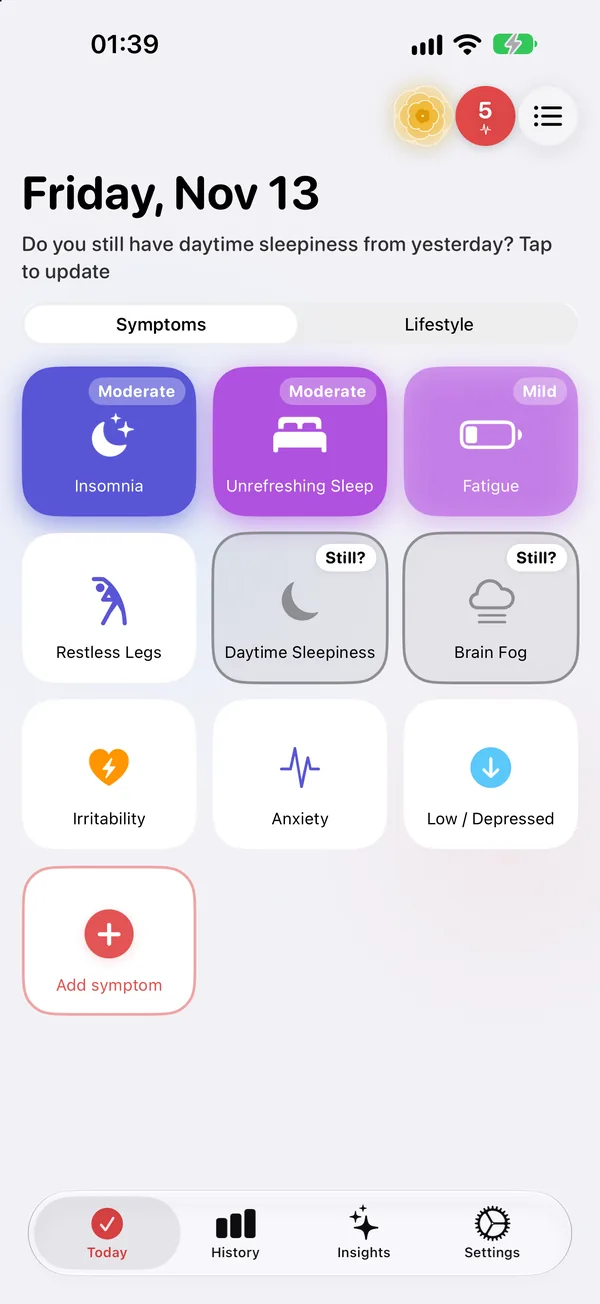
Insomnia is defined as much by the day after as by the night itself, so the most useful log covers both. Trace Health sets up these symptoms when you choose insomnia, most closely linked first.
- Insomnia is the anchor: log it the morning after a bad night, with a severity that reflects the whole night. Mild for a slow start or one waking, moderate for an hour or more awake, severe for a night with very little sleep.
- Unrefreshing Sleep captures nights that looked long enough but left you unrestored, a pattern that can point to sleep apnoea, pain or restless legs rather than classic insomnia.
- Daytime Sleepiness and Fatigue are worth logging separately. Many people with insomnia feel tired but wired and cannot nap, while real sleepiness, dozing off without meaning to, deserves a closer look.
- Restless Legs is one of the causes the NHS names for insomnia. If an urge to move your legs keeps you awake, logging it shows how many of your bad nights it explains.
- Brain Fog and Irritability are the daytime cost most people notice first, and the ones that improve visibly when sleep does.
- Anxiety and Low / Depressed mood both cause insomnia and are made worse by it. Logging them shows which comes first in your case, which matters for treatment.
The habits and factors that shape your nights
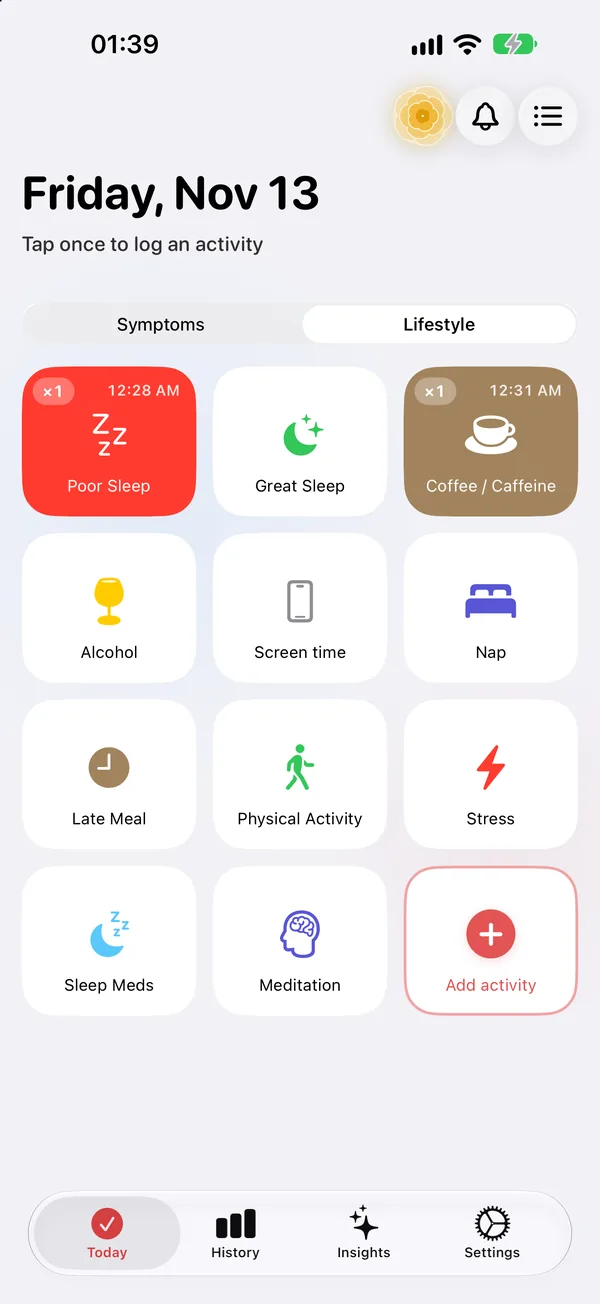
The NHS advice on insomnia centres on a handful of habits, and each of them can be logged on the same timeline as your sleep. The point is not to follow every rule perfectly, but to see which ones actually matter for you.
- Poor Sleep and Great Sleep summarise each night. With the Apple Health sleep import (Premium), nights recorded by an Apple Watch or another app become these logs automatically, with adjustable hours.
- Caffeine can keep you awake for many hours after a cup. Logging it, especially after lunch, shows whether your later cups line up with your worst nights.
- Alcohol helps people fall asleep but fragments the second half of the night. It is one of the most common hidden causes of early waking.
- Screen Time in bed and Late Meal are on the NHS list of things to avoid before bed, and both are easy to log in one tap.
- Nap cuts both ways: a long or late nap reduces the sleep pressure you need at night. CBT-I usually limits naps, and the log shows whether that is happening.
- Physical Activity during the day tends to improve sleep, while intense exercise late in the evening can delay it.
- Stress and Meditation belong together: one keeps the mind busy at night, the other is one way of winding down.
- Sleep Medications are usually recommended only for short periods. Logging each dose shows how often you rely on them and how your nights compare without them.
Why a record of your nights is the core of CBT-I
Cognitive behavioural therapy for insomnia is the first-line treatment recommended by sleep specialists, ahead of sleeping pills. It works on the habits and thoughts that keep insomnia going: spending long hours in bed awake, napping to make up for lost sleep, clock-watching, and the dread of another bad night. Its main techniques, such as going to bed only when sleepy, getting up when you cannot sleep, and keeping a fixed wake time, are adjusted week by week from what your record shows. Without that record, it is very hard to know whether things are improving, because a single bad night can make a whole good week feel like failure.
Logging in the morning, rather than during the night, is important. Checking your phone at 3 am to record a waking means light, a glance at the time and a burst of frustration, all of which make it harder to fall back asleep. A quick entry over breakfast is accurate enough: how bad the night was, whether restless legs or worry kept you awake, and what you did the evening before. Add how you felt during the day as it unfolds, such as sleepiness, brain fog or irritability.
Be clear about what Trace Health records. It logs how each night felt, with a severity, the symptoms around it and the habits on the same day, and it can import hours of sleep from Apple Health with Premium. It does not ask you for bedtimes, minutes to fall asleep or the number of awakenings. If your therapist or a digital CBT-I programme gives you a formal sleep diary, keep it as instructed, and use Trace Health for the wider picture: which caffeine, alcohol, screen or stress patterns come before your hardest nights, and whether your days improve as your sleep does. The insomnia tracking guide covers the nightly detail in more depth.
When to see a doctor, and preparing for the appointment
The NHS suggests seeing a doctor if changing your sleep habits has not helped, if you have had trouble sleeping for months, or if insomnia is affecting your daily life in a way that makes it hard to cope. Mention it sooner if you snore loudly or a partner has noticed pauses in your breathing, which can mean sleep apnoea, if you fall asleep without meaning to during the day, or if restless legs keep you awake, because each of these has its own treatment. If insomnia comes with persistent low mood or anxiety, say so, because treating those often improves sleep too. If you have thoughts of suicide, contact a crisis line, your emergency number or an emergency department straight away.
A doctor will usually ask how long the problem has lasted, how many nights a week are affected, whether it is falling asleep, staying asleep or waking early, how you feel during the day, and what you have tried. Sleeping pills are usually only prescribed for a few days or weeks, because they lose effect and can cause dependence, so the conversation often turns to CBT-I, which many health services now offer in person, in groups or through an app or online programme.
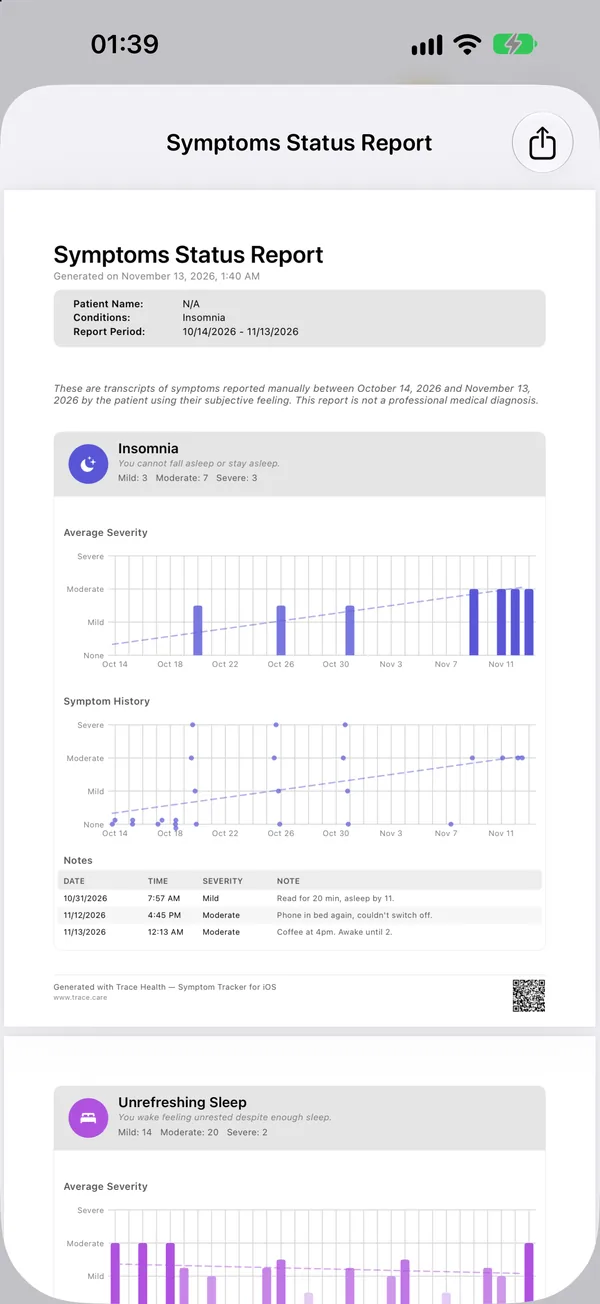
A doctor-ready PDF from Trace Health answers most of those questions before they are asked: weeks of nights with their severity, the days after them, and the habits logged alongside, such as caffeine, alcohol, naps and sleep medications. It turns a short appointment spent trying to remember into one spent deciding what to change.
How it looks in Trace Health
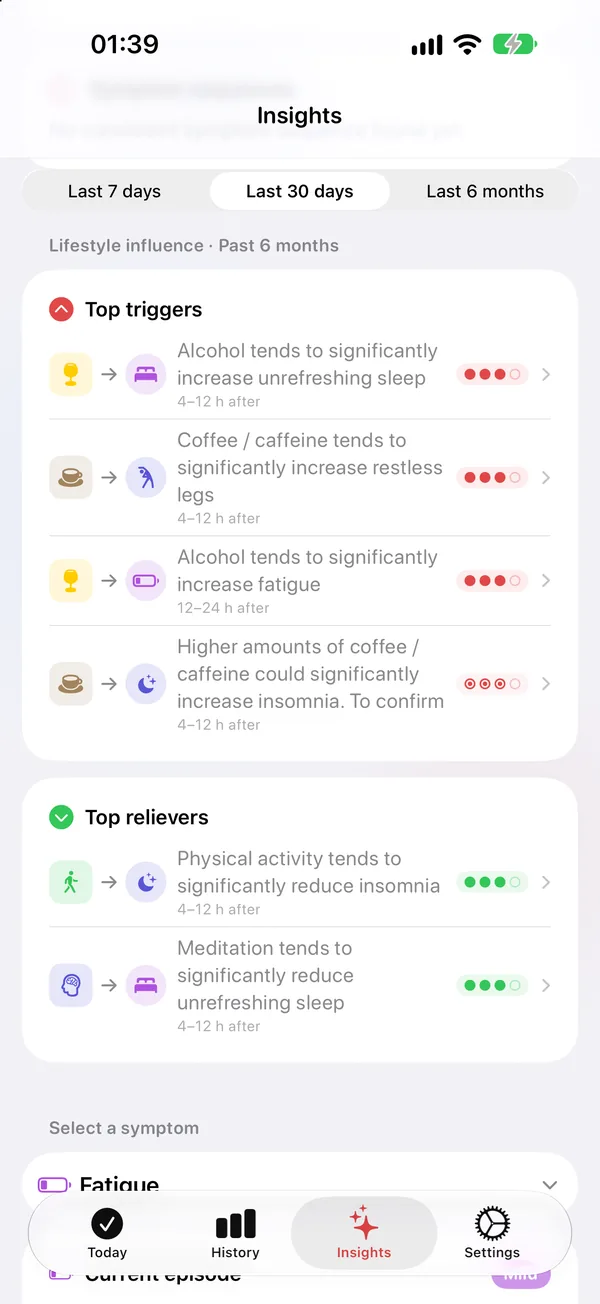
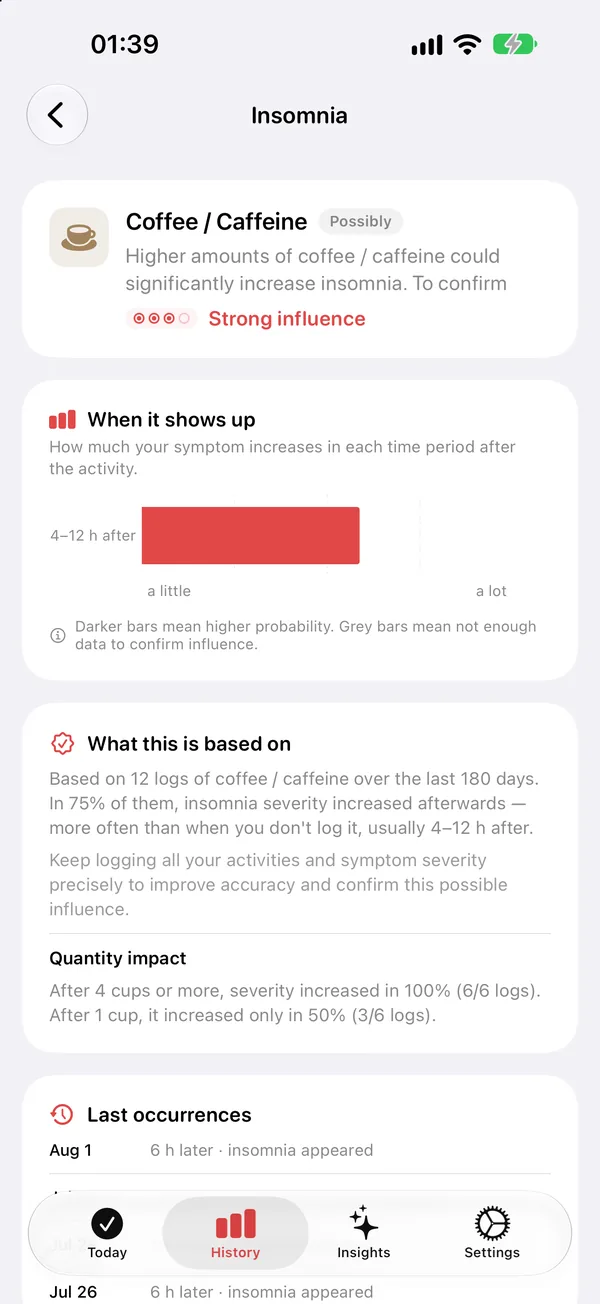
Example screens with sample data, the way they look after a few weeks of tracking.
Frequently asked questions
Can Trace Health replace a CBT-I sleep diary?
Not entirely, and it is better to be clear about that. A CBT-I sleep diary records exact times: when you went to bed, how long it took to fall asleep, how many times you woke and when you got up, which a therapist uses to set your sleep window. Trace Health records how each night felt, with a severity, alongside your daytime symptoms and the habits around them, such as caffeine, alcohol, screens, naps and stress, and it can import hours of sleep from Apple Health with Premium. Many people use both: the formal diary for the therapy, and Trace Health for the wider pattern of what comes before bad nights and how the days after them feel.
Should I log a bad night during the night or in the morning?
In the morning. Picking up your phone in the middle of the night means bright light, checking the time and a jolt of frustration, which all make it harder to fall back asleep, and CBT-I specifically discourages clock-watching. A quick entry after you get up is accurate enough: rate the night with a severity, add Restless Legs or Anxiety if they kept you awake, and log the evening's habits, such as caffeine, alcohol, a late meal or screen time in bed, if you have not already. Trace Health lets you log for any time, so the entry still lands on the right night, and the daytime symptoms you add later fill in the rest of the picture.
Could restless legs be causing my insomnia?
It is possible, and it is worth checking because the treatment is different. Restless legs is an urge to move your legs with uncomfortable sensations, worse when you lie still in the evening and eased by moving, and it is one of the causes of insomnia the NHS lists. Log Restless Legs as its own symptom whenever it happens, and log Insomnia for the night as a whole. After a few weeks you can see what share of your bad nights involve your legs. If it is most of them, ask your doctor about it, since low iron is a common and treatable cause, and some medicines, including sedating antihistamines often taken for sleep, can make restless legs worse.
Is my sleep data private?
Your diary stays on your iPhone by default, with an optional backup to your own private iCloud. There is no Trace Health account and no sign-up, and your entries are not uploaded to a server for analysis. Sleep logs can reveal a lot, including stress, alcohol, medication and mood, so that matters. If you turn on the Apple Health import, nights and naps come in from Health and stay on the phone. You decide if and when your diary leaves the device, by creating a PDF report and sharing it yourself with a doctor, a sleep clinic or a therapist.
How long should I track my sleep before seeing a doctor?
Two to four weeks is usually enough to show a clear picture: how many nights a week are affected, whether the problem is falling asleep, staying asleep or waking early, and how much it affects your days. Do not wait to finish a log if your insomnia is already severe, if you are falling asleep while driving, or if it comes with very low mood or thoughts of suicide, in which case seek help straight away. If you are starting CBT-I or a new medicine, keep logging through the first six to eight weeks, because insomnia treatments often make things a little harder before they get better, and a record shows the real trend rather than the last few nights.
Can I log symptoms from my Apple Watch?
Yes. Trace Health has an Apple Watch app: tap a symptom on your wrist the moment it starts, and tap again to change its severity or mark it gone. Complications keep your key symptoms on the watch face, and every log joins the same history, charts and doctor report on your iPhone. It is part of Premium and needs watchOS 11 or later.
Does Trace Health work on iPhone Duo?
Yes. Trace Health is made for iPhone Duo. Folded, you log a symptom with one hand on the cover screen. Open, your symptoms and habits sit side by side, and each symptom page shows its history and insights together.
Can I track my daily mood alongside my symptoms?
Yes. Since version 1.14, Trace Health asks once a day how you felt overall, in one tap. Your mood sits next to the symptoms and daily factors you log, and after a few weeks Trace shows what tends to lift it or weigh on it and how it moves around your symptoms. The findings are worked out with statistics on your iPhone, and your mood can sync both ways with Apple Health.
Start tracking your insomnia. No account needed, and your diary stays on your iPhone. Set up for insomnia in under a minute.