Track Sensory Load, Energy and Recovery as an Autistic Person
Autism is not an illness, and there is nothing about being autistic that needs a symptom score. It is a lifelong difference in how people communicate, process the senses and experience the world. What can be worth tracking is the load: the sensory overload, meltdowns, shutdowns, anxiety and exhaustion that come when the environment asks for more than you have. The National Autistic Society names sensory overload, changes of routine and social demands among the most common causes of meltdowns. A simple log shows which demands cost you most, how long recovery really takes, and gives you evidence when you ask for adjustments at work, school or home.
What to track: load and what it costs you
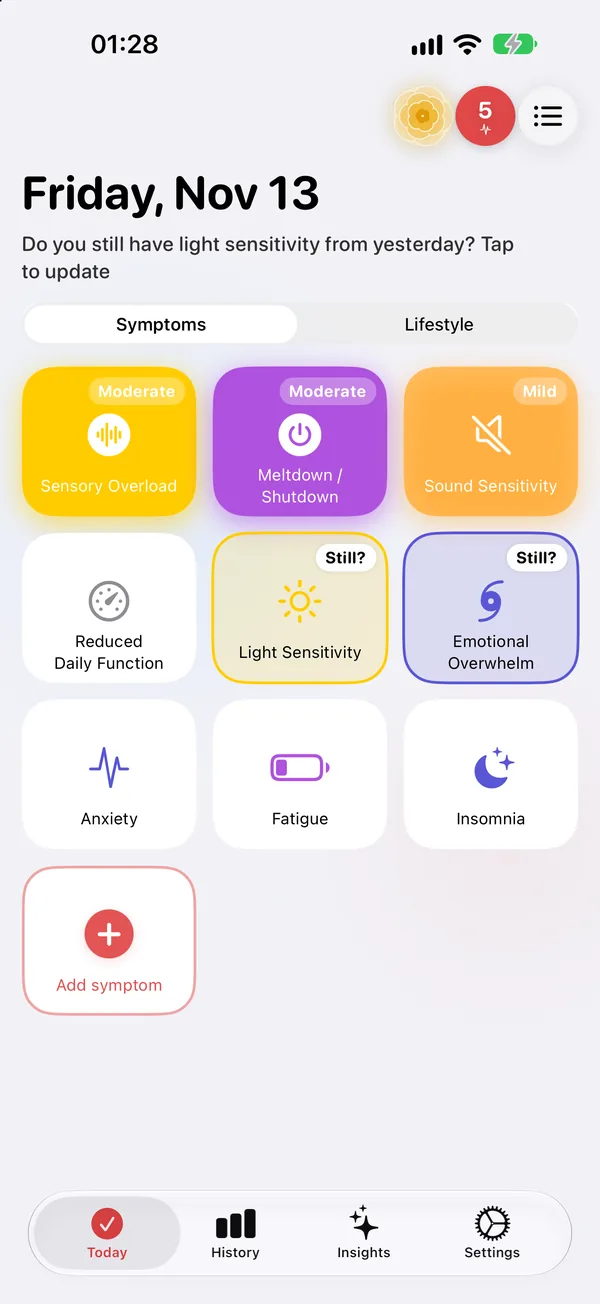
Choosing autism in Trace Health switches on these trackers, most closely linked first. Each takes one tap and a severity, mild, moderate or severe, and you mark it gone when it has passed, which records how long it lasted.
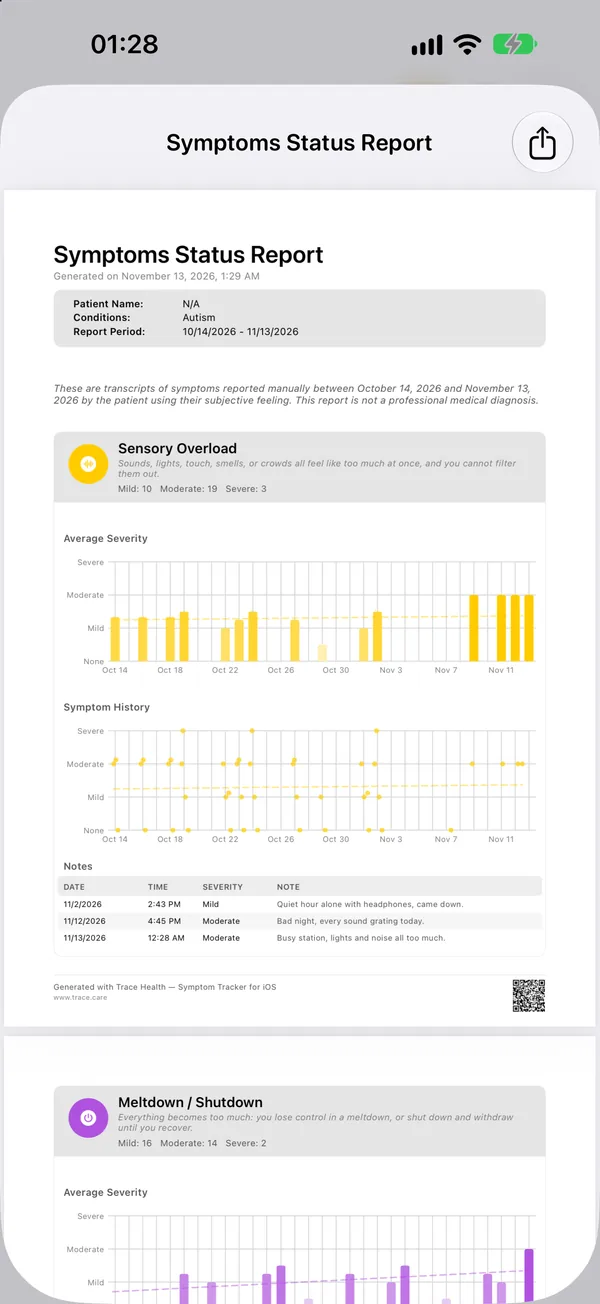
- Sensory Overload is the core entry: the moment sounds, lights, touch, smells or crowds become too much to filter. Logging it as it builds, and marking it gone when you are back to baseline, shows how often it happens and how long you need to recover.
- Meltdown / Shutdown records the involuntary response to overload, whether that is losing control in a meltdown or withdrawing and going quiet in a shutdown. It is not a behaviour to correct, and the log is not a judgement; it shows what tends to lead there.
- Sound Sensitivity and Light Sensitivity are worth logging separately if one sense dominates, because the practical answers differ, from ear defenders to tinted glasses.
- Emotional Overwhelm and Anxiety often build alongside sensory load, especially around uncertainty and social demands.
- Fatigue and Insomnia capture energy. Many autistic people find that poor sleep lowers their sensory threshold the next day, and that busy weeks leave them exhausted long after.
- Reduced Daily Function marks days when overload or exhaustion stopped you doing things you normally can, one of the clearest early signs of autistic burnout.
Demands and recovery: the daily factors
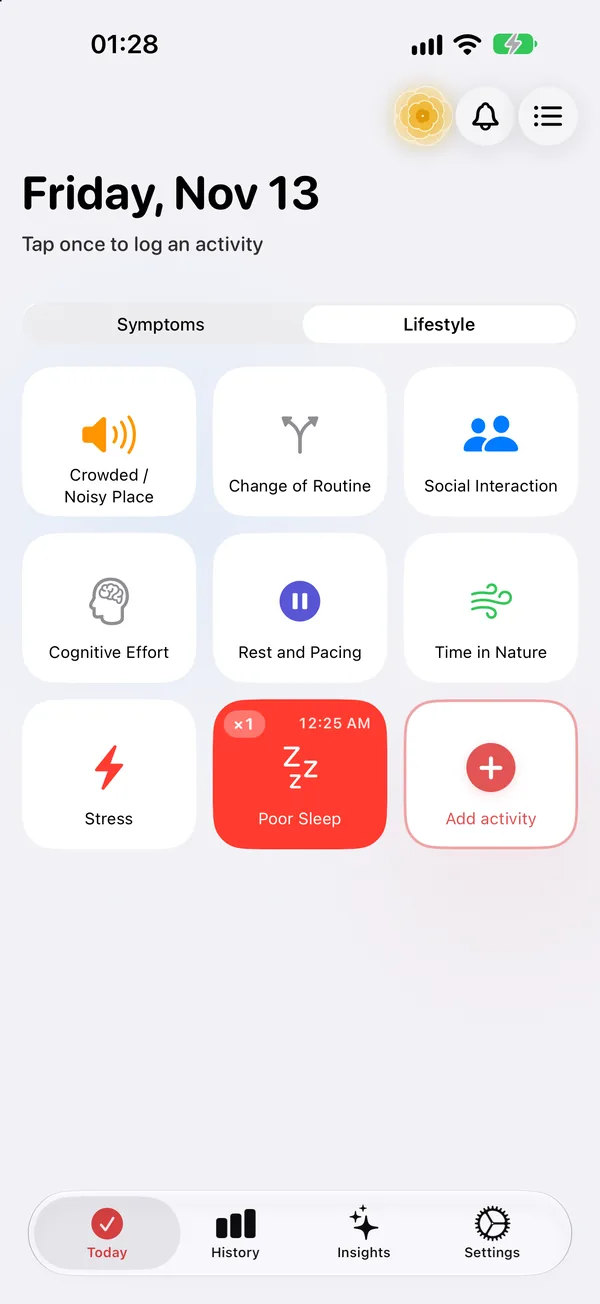
The factors Trace Health sets up for autism are a mix of demands that use energy and activities that restore it. Logging both on the same timeline is what lets you see the balance.
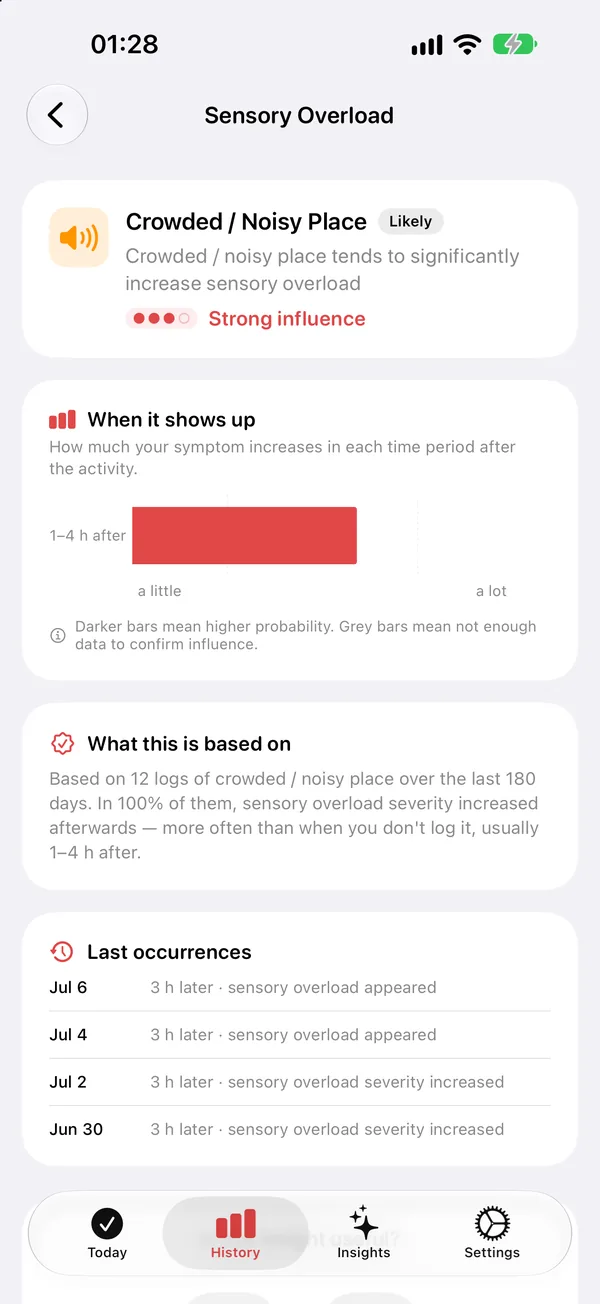
- Crowded / Noisy Place is logged with how many minutes you spent there: a supermarket, a train, an open-plan office, a party. Duration matters, because twenty minutes can be manageable when two hours is not.
- Change of Routine marks days when plans changed, whether a cancelled appointment, a substitute teacher, travel or a holiday. The effect often shows the next day, which is easy to miss without a record.
- Social Interaction can be enjoyable and still be tiring, especially when it involves masking. Logging it shows how much social time you can do before it costs you.
- Cognitive Effort covers demanding mental work, such as exams, long meetings or busy workdays, which uses the same energy as sensory processing.
- Stress and Poor Sleep lower the threshold for overload. Many people find their hardest days come after a short night.
- Rest & Pacing and Time in Nature are the recovery side: quiet time, a walk, a special interest, time alone. Logging them shows what actually helps you come back, and how much of it you need after a demanding day.
Autistic burnout and spotting the slide early
Autistic burnout is a state of long-lasting exhaustion, reduced tolerance to sensory input and loss of skills you usually manage, such as speaking, cooking or organising your day. It is often described as the result of a long period of meeting demands beyond your capacity, including the effort of masking, coping with change and living in environments that are too loud, too bright or too social. It can last weeks or months, and it is not the same as depression, though the two can overlap and both deserve support.
Burnout rarely arrives suddenly. In a log, the slide often looks like this: sensory overload becoming more frequent at the same level of demand, meltdowns or shutdowns taking longer to recover from, more days marked with reduced daily function or fatigue, and rest no longer restoring you the way it used to. Seeing that trend over a few weeks, rather than feeling it only once you are already exhausted, gives you time to act: reducing demands where you can, protecting recovery time, and asking for support.
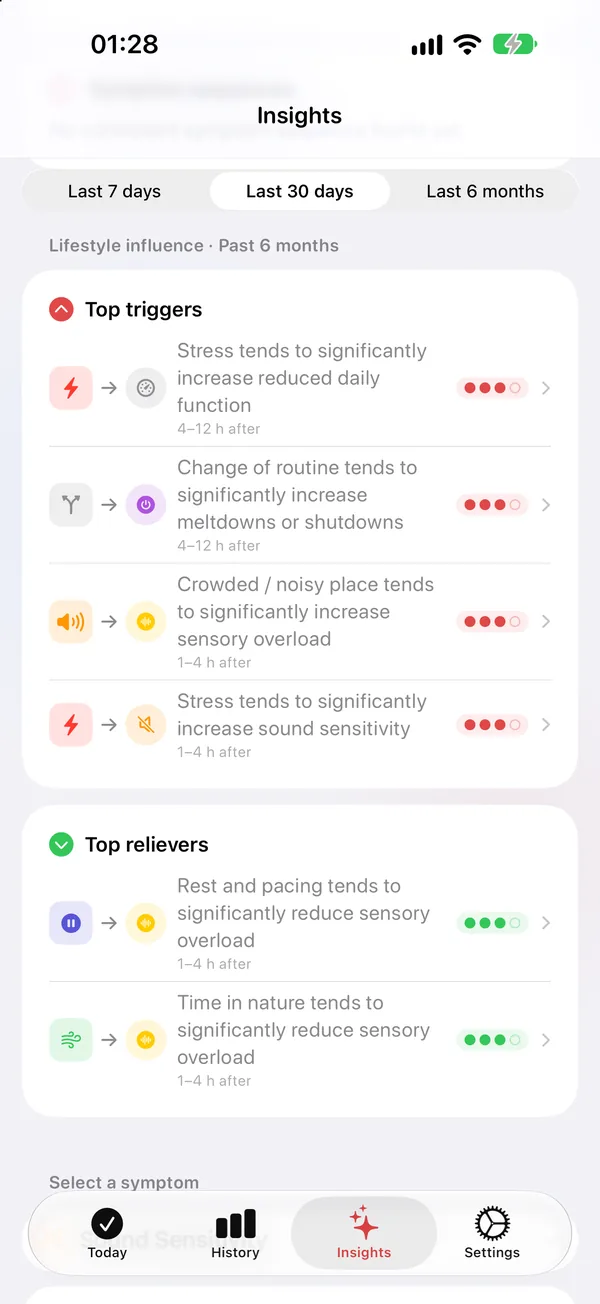
Many autistic people use energy accounting or a similar approach to budget their week. A Trace Health log can feed that: it shows which crowded places, social commitments or changes of routine tend to cost most, and how much recovery each one needs. If you notice very low mood, a loss of interest in things you love, or thoughts of suicide, talk to your doctor or a crisis line straight away, because these need more than rest.
Using your log for adjustments, assessments and support
Asking for adjustments is easier with evidence. Many workplaces and schools are expected to make reasonable adjustments for autistic people, such as a quieter desk, flexible hours, advance notice of changes, or a place to recover, but the request is often met with questions about how often and how much. A few weeks of entries answer that: how often sensory overload happened at work or school, how long recovery took, and which situations, such as time in noisy spaces or last-minute changes, were most often involved.
The same record helps in an autism assessment, with an occupational therapist building a sensory profile, or when discussing anxiety, sleep or burnout with a doctor. A doctor-ready PDF from Trace Health lays out dates, severities and the factors logged around them. You choose what goes into it and who sees it. Your diary stays on your iPhone, with no account.
Parents and carers can use family profiles (Premium) to log for a child or an adult they support, on their own iPhone. Where possible, involve the person in deciding what to log and why, and record what you observe rather than what you assume they felt. A log made with someone, rather than about them, is more accurate and more respectful, and it can help them recognise their own patterns as they grow.
How it looks in Trace Health
Example screens with sample data, the way they look after a few weeks of tracking.
Frequently asked questions
Is Trace Health an app for tracking autism symptoms?
Not in the sense of treating autism as a disease. Autism is a lifelong neurological difference, not something to score or fix. What Trace Health tracks are the experiences that often come with living in a world not built for autistic people: sensory overload, meltdowns and shutdowns, anxiety, sleep and exhaustion, next to the demands that drive them, such as crowded or noisy places, changes of routine and social time, and the things that help you recover, such as rest and time in nature. The goal is to understand your load and protect your energy, and to have evidence when you ask for adjustments or support.
Can I track for my autistic child?
Yes. With family profiles in Trace Health Premium, a parent or carer can keep a separate profile for a child on their own iPhone. Log what you observe, such as a meltdown or shutdown with its severity, time in a crowded or noisy place, a change of routine or a poor night, without guessing at feelings your child has not shared. Over a few weeks the log can show patterns that are hard to see day to day, such as harder evenings after school days with assemblies or trips. That can help with school support plans and occupational therapy. As your child grows, involve them in the tracking, so the record reflects their experience and not only what adults see.
How can a log help me ask for adjustments at work or school?
Requests are often met with questions about how often a problem happens and how much it affects you, and a log answers both. Log sensory overload and meltdowns or shutdowns when they happen, and log the context, such as time in a crowded or noisy place with its duration, changes of routine and social demands. After a few weeks, you can show dates, severities and recovery times, and point to the situations most often involved. A PDF report from Trace Health makes that easy to share with a manager, occupational health, a teacher or a special educational needs coordinator, if and when you choose. Specific evidence tends to lead to specific adjustments.
Is my data private?
Your diary stays on your iPhone by default, with an optional backup to your own private iCloud. There is no Trace Health account and no sign-up, and your entries are not uploaded to a server for analysis. That matters when a log may be about a child or about difficulties at work or school, information you may want to share only on your own terms. You decide if and when your diary leaves the phone, by creating a PDF report and sharing it yourself with a clinician, an occupational therapist, a school or an employer. Nothing is sent automatically to anyone.
How do I know if I am heading into autistic burnout?
Look at the trend rather than single days. Signs of approaching burnout often include sensory overload happening more easily than usual, meltdowns or shutdowns becoming more frequent or taking longer to recover from, more days when you cannot manage things you normally can, more fatigue, and rest no longer restoring you. In Trace Health, the charts show how often each of these was logged week by week, and Reduced Daily Function and Fatigue entries make the slide easier to see. If the trend is rising, it is a signal to reduce demands where you can and to seek support. If you also notice very low mood or thoughts of suicide, talk to a doctor or a crisis line straight away.
Can I log symptoms from my Apple Watch?
Yes. Trace Health has an Apple Watch app: tap a symptom on your wrist the moment it starts, and tap again to change its severity or mark it gone. Complications keep your key symptoms on the watch face, and every log joins the same history, charts and doctor report on your iPhone. It is part of Premium and needs watchOS 11 or later.
Does Trace Health work on iPhone Duo?
Yes. Trace Health is made for iPhone Duo. Folded, you log a symptom with one hand on the cover screen. Open, your symptoms and habits sit side by side, and each symptom page shows its history and insights together.
Can I track my daily mood alongside my symptoms?
Yes. Since version 1.14, Trace Health asks once a day how you felt overall, in one tap. Your mood sits next to the symptoms and daily factors you log, and after a few weeks Trace shows what tends to lift it or weigh on it and how it moves around your symptoms. The findings are worked out with statistics on your iPhone, and your mood can sync both ways with Apple Health.
Start tracking your sensory load. No account needed, and your diary stays on your iPhone. Set up for autism in under a minute.