Track Sensory Overload
Sensory overload happens when more is coming in through your senses than your brain can filter at that moment. Noise, bright or flickering light, strong smells, scratchy clothing, people brushing past, several conversations at once: each manageable on its own, together too much. It can bring anxiety, irritability, a headache, an urge to escape, and in autistic people a meltdown or shutdown. Your threshold is not fixed. It drops when you are tired, unwell or stressed, which is exactly what a record helps you see.
Why track this symptom?
- Learn which places and situations reliably push you over, and how long you can manage them.
- See how sleep, stress and a busy week lower your threshold, so you can plan recovery time.
- Give your clinician, school or employer dated evidence to support reasonable adjustments.
How Trace Health helps
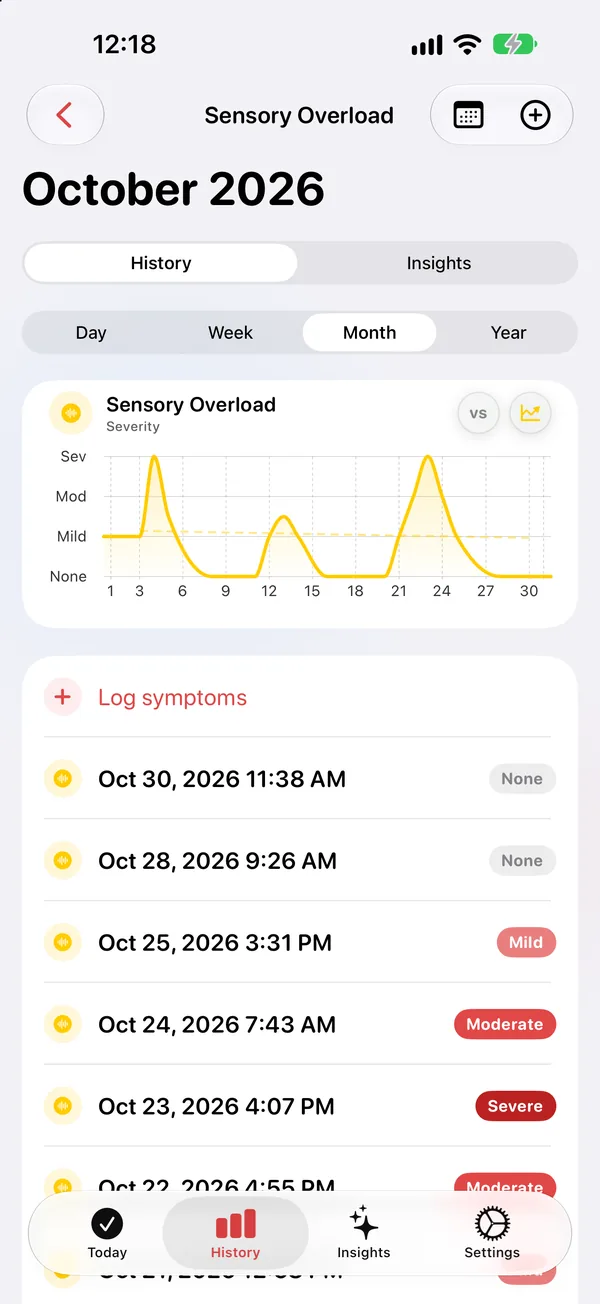
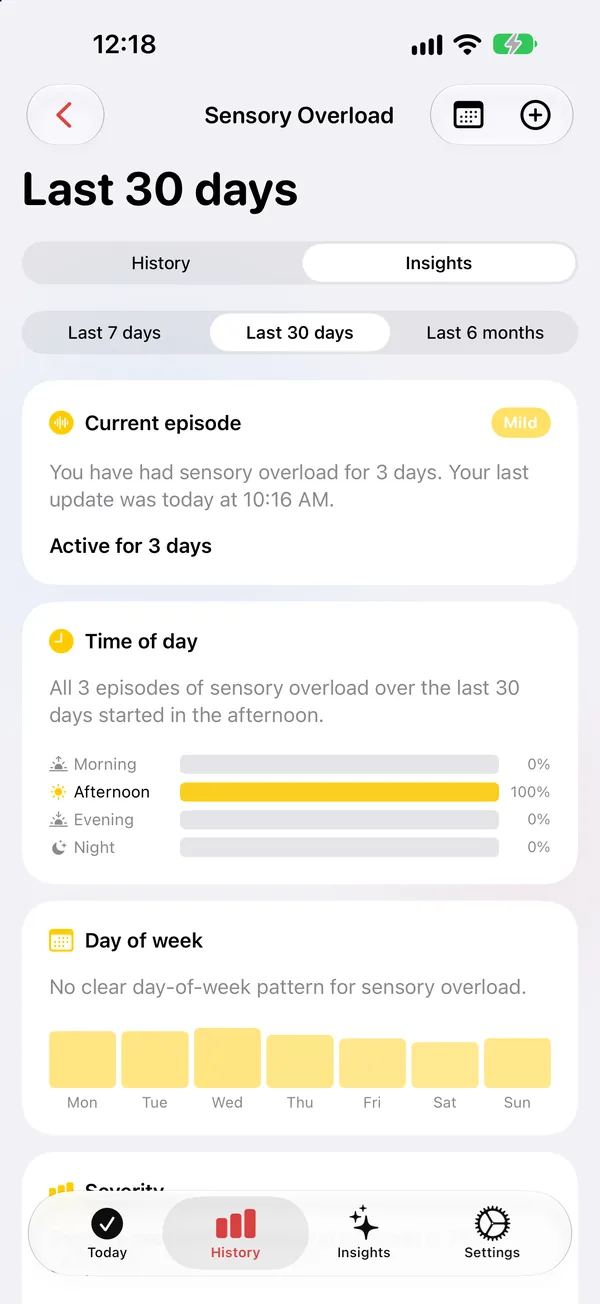
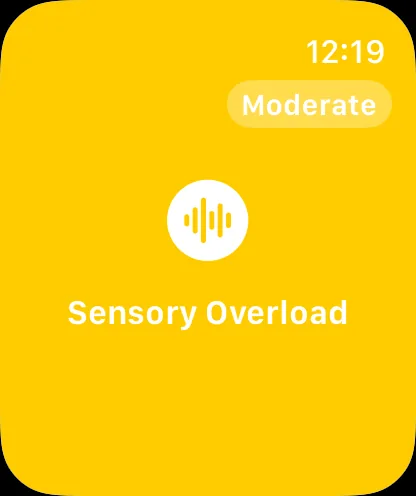
When everything is too loud and too bright, a long form is the last thing you need. In Trace Health you tap Sensory Overload and choose mild, moderate or severe, then mark it gone once you have recovered, which records how long recovery took. Log time in a crowded or noisy place with its duration, plus sleep, rest and screen time, on the same timeline.
How it looks in Trace Health
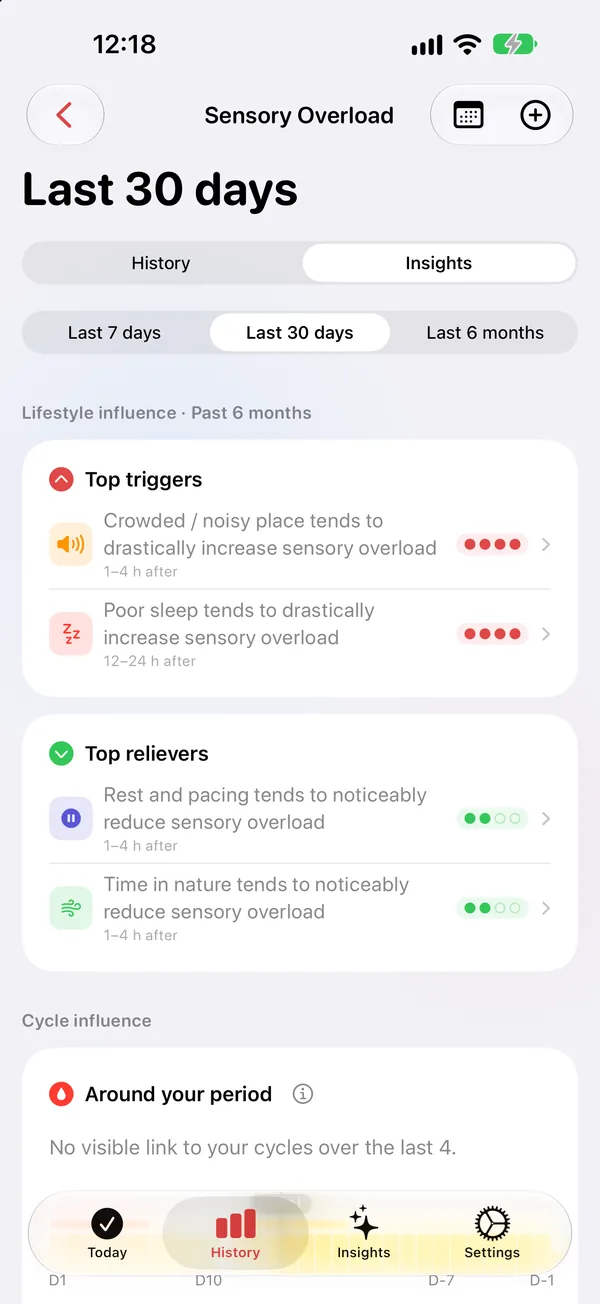
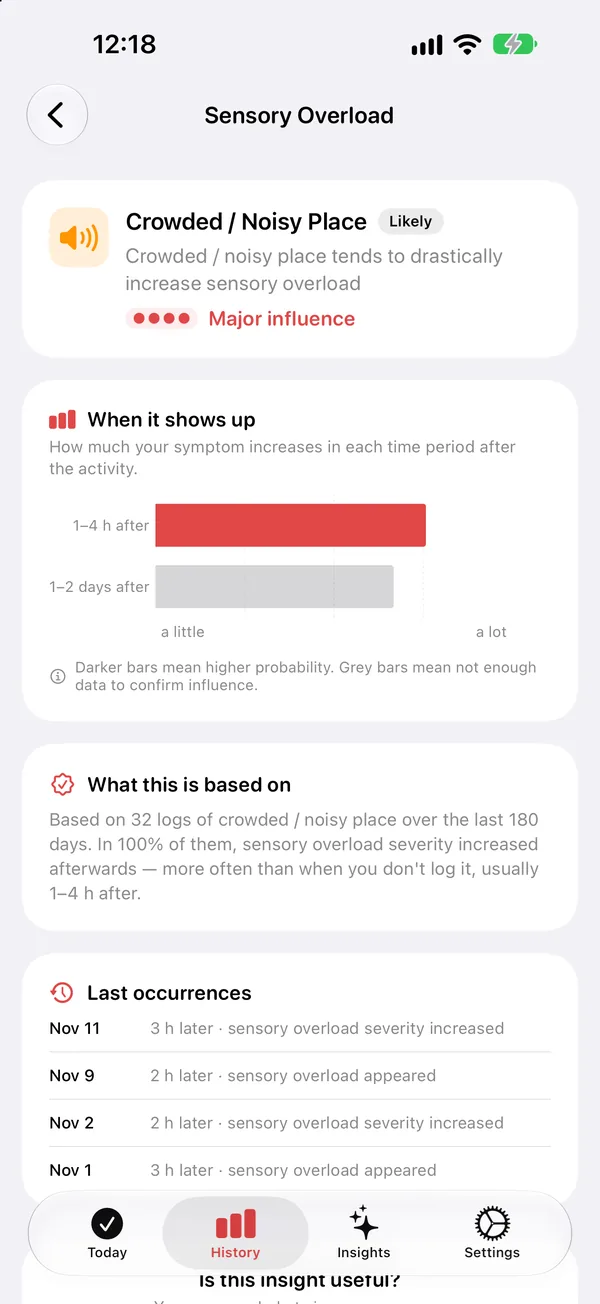
Example screens with sample data, the way they look after a few weeks of tracking.
Common Causes
Sensory overload is most closely associated with autism, where differences in sensory processing are central, and with ADHD, where filtering out irrelevant input is often hard. It is frequent in anxiety disorders and PTSD, where a nervous system on alert treats ordinary sounds as threats. Migraine brings sensitivity to light, sound and smell during attacks and sometimes between them. After a concussion, sensory tolerance can be reduced for weeks or months. People with ME/CFS, long COVID and fibromyalgia often report that noise and light become harder to tolerate when they are depleted. In anyone, sleep deprivation, illness, hunger, stress and long stretches in busy environments lower the threshold, which is why the same supermarket can be fine one day and impossible the next.
When to See a Doctor
Seek urgent care for a sudden, severe headache with sensitivity to light, for light sensitivity with fever and a stiff neck, or for new confusion, weakness, slurred speech or loss of vision. Get prompt advice if noise or light sensitivity is new after a head injury. Book a routine appointment if sensory overload is limiting your work, education or daily life, if you are wondering about an autism or ADHD assessment, or if it is driving anxiety or low mood. An occupational therapist can help with practical strategies and adjustments, and your doctor can refer you for assessment if needed.
Frequently asked questions
What does sensory overload feel like?
People describe it as everything turning up at once. Sounds you could normally ignore, such as a fridge humming, a fluorescent light buzzing or a conversation across the room, become impossible to tune out. Light can feel painful, clothing irritating, and being touched unbearable. Thinking becomes difficult, and you may feel panicky, irritable, tearful or desperate to leave. Some people get headaches or nausea. If the overload continues, autistic people may have a meltdown or shut down. Logging the episode with its severity, and noting which senses were involved, helps you recognise the early signs next time, before you reach the point where leaving is the only option.
Is sensory overload only an autism thing?
No. Differences in sensory processing are very common in autism and are part of how it is described, but sensory overload also occurs in ADHD, in anxiety disorders, in PTSD, where hypervigilance makes every sound feel significant, and in migraine, where sensitivity to light and noise is part of the attack. People with ME/CFS, long COVID, fibromyalgia or after a concussion often find their sensory tolerance drops sharply when they are depleted. Almost anyone can feel overloaded when exhausted or in a very busy environment. What differs is how often it happens and how much it affects daily life, which is what a log measures.
How long does it take to recover from sensory overload?
It varies a lot, from minutes in a quiet room to hours or even days after a long, intense exposure, especially if overload led to a meltdown or shutdown. Recovery is usually faster if you can leave early, reduce input with ear defenders, sunglasses or a hood, and rest somewhere calm. It tends to be slower when you are already tired, have slept badly or have had several demanding days in a row. Marking Sensory Overload as gone in Trace Health records how long each episode lasted, and logging Rest / Pacing or Time in Nature shows what helps you recover. Over weeks this gives you a realistic idea of how much recovery time to plan after a busy event.
When should I see a doctor about sensory overload?
See your doctor if sensory overload is frequent enough to limit work, school, shopping or social life, or if you think you might be autistic or have ADHD and would like an assessment. Get medical advice if sensitivity to light or noise is new, especially with headaches, after a head injury, or with changes in vision or hearing. Seek urgent care for a sudden severe headache, a stiff neck with fever and light sensitivity, or new weakness, confusion or difficulty speaking. If overload leaves you very anxious or low, or you are having thoughts of harming yourself, contact a mental health service or a crisis line.
What should I log to show the impact of sensory overload?
For an assessment, a workplace adjustment or a school support plan, concrete examples are more persuasive than general statements. Log each episode with severity and when it ended, and log the place that triggered it, for example time in a crowded or noisy place with its duration. Over a few weeks you can show how often it happens, what triggers it and how long recovery takes. Add Reduced Daily Function on days when overload stopped you doing something you needed to do. Trace Health turns this into a dated PDF report you can share with a clinician, an occupational therapist or, if you choose, a school or employer, while the diary itself stays on your iPhone.
Your health data stays on your iPhone.
No account. Private. No personal information is ever requested. Your health data stays on your iPhone by default. A backup option to your private iCloud is available. Trace Health never sells your data.
What people say
Rated 4.7 out of 5 from 81+ ratings on the App Store.
- “This app is wonderful. You can add symptoms and rearrange them as you like. The best part: your sensitive health data is only stored on your own device.” (WhoKnowsTypo, Netherlands)
- “Finally a simple iOS 26 symptom reporting app, thank you 😀” (stranack, United Kingdom)
Read the complete guide: How to Track Sensory Overload and Your Recovery →