Track Meltdowns and Shutdowns
A meltdown is an involuntary response to being completely overwhelmed, often by sensory overload, sudden change, social demands or exhaustion. It can look like shouting, crying, lashing out or bolting, and it is not a tantrum or a choice. A shutdown is the quieter version: going silent, withdrawing, being unable to move, speak or decide until you recover. Both are common in autistic people and also happen in ADHD. Tracking them is about understanding the load that leads there, so it can be reduced.
Why track this symptom?
- See the build-up: which mix of noise, change, social demands and tiredness comes first.
- Learn how long recovery really takes, so you can protect that time instead of pushing through.
- Give clinicians, schools or employers dated evidence of what helps and what needs to change.
How Trace Health helps
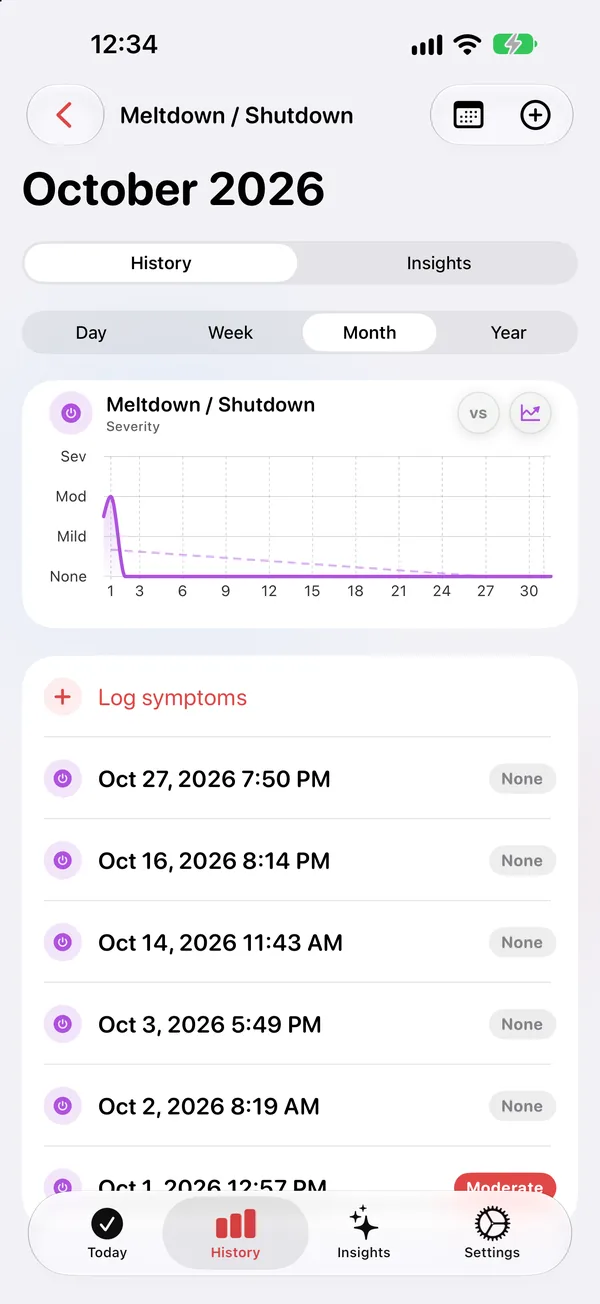
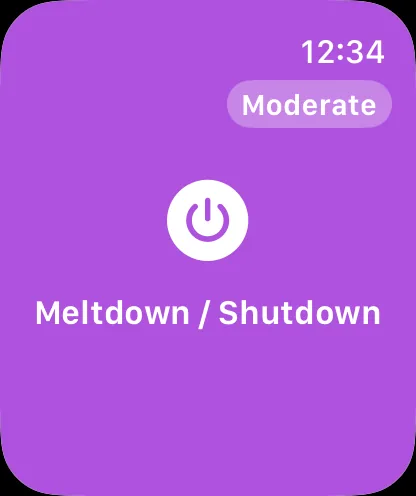
After a meltdown or shutdown you are depleted, so logging has to be effortless. In Trace Health you tap Meltdown / Shutdown, choose mild, moderate or severe, and mark it gone once you have recovered. Log the crowded places, routine changes and social time around it on the same timeline. With Apple Health sync on (Premium), entries are written to Health as Mood Changes.
How it looks in Trace Health
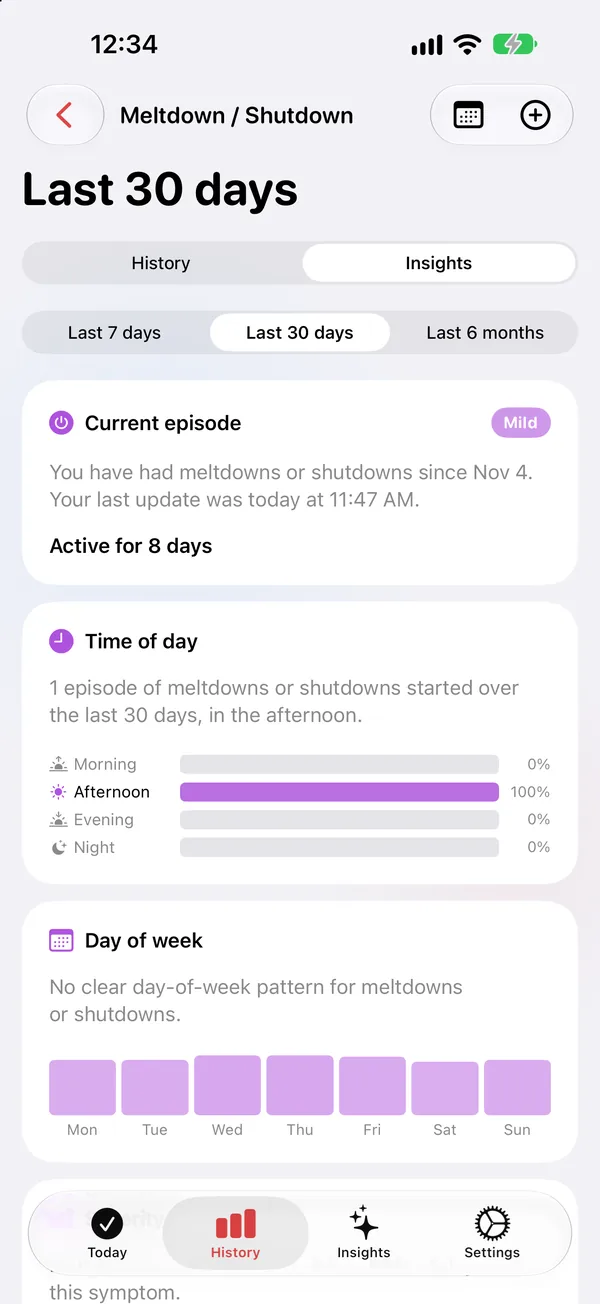
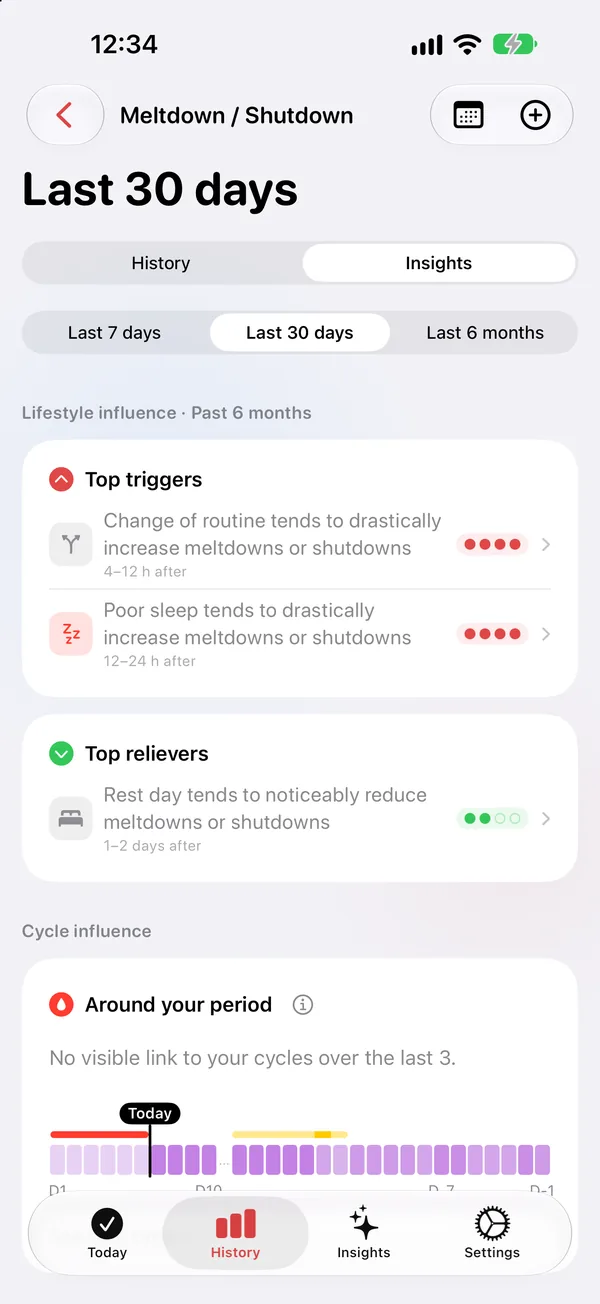
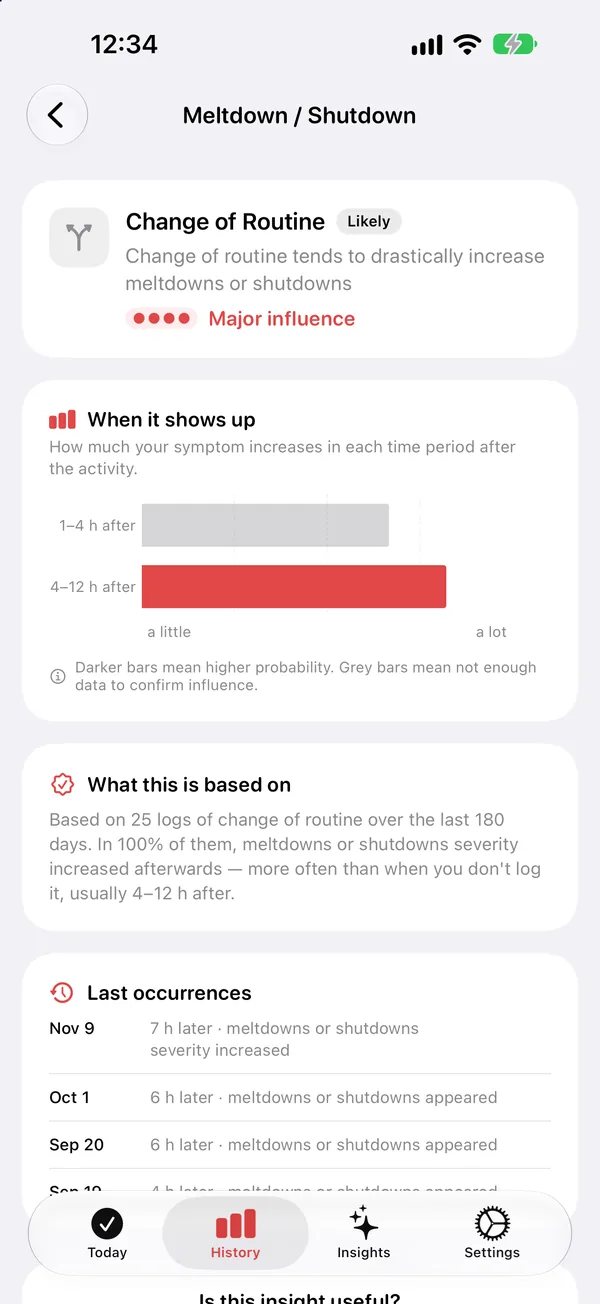
Example screens with sample data, the way they look after a few weeks of tracking.
Common Causes
Meltdowns and shutdowns are most often described in autism, where they are a response to overload rather than a behaviour choice. The National Autistic Society names sensory overload, unexpected change, difficulty communicating needs, social demands and anxiety as common causes, and episodes are more likely when someone is tired, unwell, hungry or has been masking for a long time. They become more frequent during autistic burnout. People with ADHD can have similar episodes of emotional overload, often triggered by frustration or a sudden demand. Overwhelm with shutting down also occurs in PTSD, where it can overlap with dissociation, and in severe anxiety. In young children, the line between meltdowns and ordinary tantrums can be hard to draw, which is one reason careful observation over time helps.
When to See a Doctor
Get urgent help if a meltdown leads to injury, if someone is in danger, or if there are thoughts of self-harm or suicide: call your emergency number or a crisis line. See a doctor promptly if episodes are new in an adult, or come with confusion, memory gaps, jerking movements or loss of awareness, because seizures and other medical causes should be ruled out. Book an appointment if meltdowns or shutdowns are becoming more frequent, lasting longer, or affecting school, work or relationships. An autism service, psychologist or occupational therapist can help with triggers, recovery plans and adjustments.
Frequently asked questions
What is the difference between a meltdown and a tantrum?
A tantrum is goal-directed: a child wants something, and the behaviour usually stops when they get it or when there is no audience. A meltdown is not under the person's control. It is a reaction to being overwhelmed, and it continues until the nervous system calms down, whether or not anyone is watching and whatever is offered. Rewards and punishments do not stop a meltdown, though reducing noise, light and demands often helps. Meltdowns happen in autistic adults as well as children. Logging them with what came before, such as sensory overload, a change of plan, social demands or poor sleep, helps families and clinicians respond to the cause rather than the behaviour.
What does an autistic shutdown feel like?
People describe shutdown as their system going offline. You may be unable to speak or only manage a few words, find it hard to move or make decisions, want to be in a dark quiet place, and feel numb or detached. From the outside it can look like ignoring people or sulking, which it is not. Shutdowns are often a response to the same overload that causes meltdowns, and some people tend more towards one than the other. They can last minutes or hours. Logging a shutdown with its severity and marking it gone when you recover shows how often they happen and how long they last, which is useful when planning your week or explaining your needs to others.
Is a meltdown the same as autistic burnout?
No, though they are connected. A meltdown or shutdown is an acute reaction to overload, lasting minutes to hours. Autistic burnout is a longer state of exhaustion, lasting weeks or months, often after a long period of masking, coping with change or meeting demands beyond your capacity. During burnout, sensory tolerance drops, skills you normally manage become harder, and meltdowns or shutdowns often become more frequent. A log can show that slide: if episodes are happening more often, recovery is taking longer, and Reduced Daily Function and Fatigue entries are increasing, it may be a sign of burnout and a reason to reduce demands and seek support.
When should I get help with meltdowns or shutdowns?
Seek support if meltdowns or shutdowns are becoming more frequent or intense, if they put you or others at risk of injury, or if they are affecting work, school or relationships. A doctor, autism service, clinical psychologist or occupational therapist can help identify triggers and practical adjustments. Get urgent help if someone is injured, or if you or the person you care for has thoughts of self-harm or suicide: call your emergency number or a crisis line. If episodes are new in an adult with no history of them, or come with confusion, memory gaps or physical symptoms, mention this to a doctor, because other causes, such as seizures, should be considered.
What should I log to understand my meltdowns?
Log each meltdown or shutdown with its severity and mark it gone when you have recovered. On the same timeline, log the things the National Autistic Society describes as common triggers: time in a crowded or noisy place, changes of routine, social interaction, cognitive effort and stress, plus sleep. Log what helps you recover, such as rest or time in nature. After a few weeks, look at the days before each episode: the build-up is often cumulative over a day or two rather than a single event. Trace Health turns these entries into charts and a dated PDF report you can share with an autism service, a psychologist, or a school or employer when discussing adjustments.
Your health data stays on your iPhone.
No account. Private. No personal information is ever requested. Your health data stays on your iPhone by default. A backup option to your private iCloud is available. Trace Health never sells your data.
What people say
Rated 4.7 out of 5 from 81+ ratings on the App Store.
- “Very clean and well organized, nicely customizable. Practical widgets for the home screen. Exactly what I was looking for, thanks 👍” (jxleya, Germany)
- “I highly recommend this app, no annoying ads etc, straight to the point of keeping a track of health symptoms, the best health monitor app I have ever used.” (Trisroy-Best, United Kingdom)
Read the complete guide: How to Track Meltdowns, Shutdowns and the Build-Up →