Track Heart Rhythm Symptoms and Their Triggers
An arrhythmia is a problem with the rate or rhythm of your heartbeat. The NHS lists atrial fibrillation (AF), supraventricular tachycardia (SVT) and ectopic beats, the extra or skipped beats almost everyone has at some point, among the common types. They can cause palpitations, a fluttering, pounding or skipping feeling, along with breathlessness, dizziness, fainting or tiredness. Many come and go, which means they are often absent at the appointment or during a short ECG. A dated record of when episodes happen, how they felt and what came before them fills that gap. Trace Health records how you feel and what you did; it does not measure your heart rate or rhythm.
What to track for a heart rhythm problem
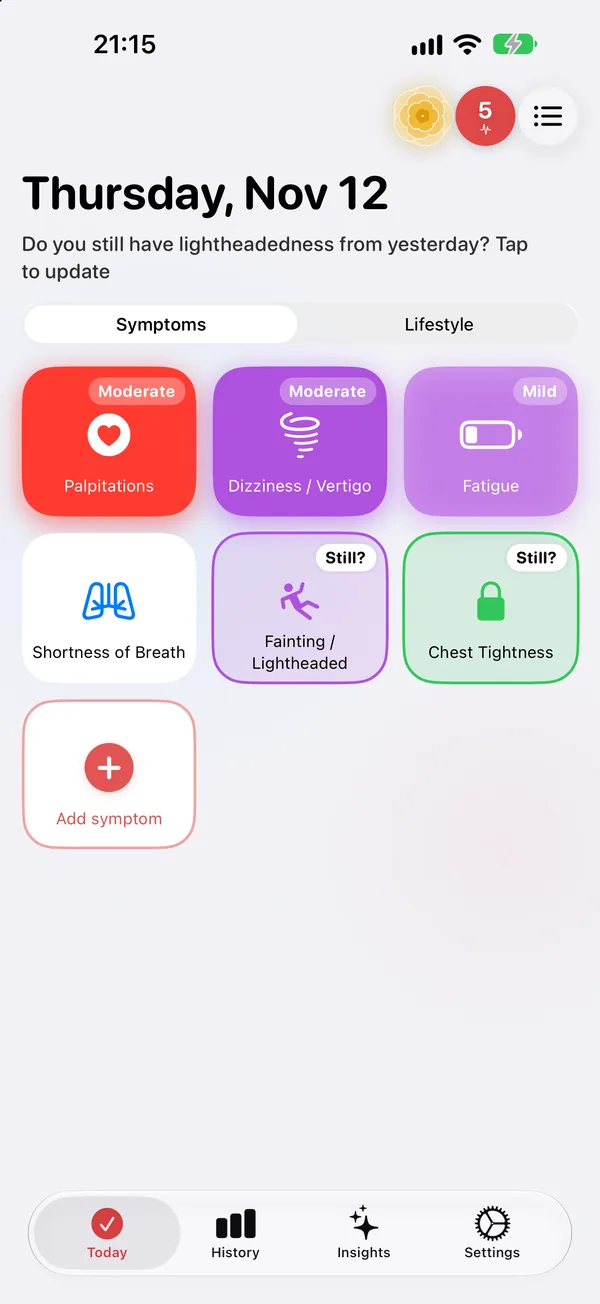
Choosing heart rhythm problems in Trace Health switches on the symptoms that matter most, in this order. Severity is how the episode felt, mild, moderate or severe, and you mark it gone when it stops, which records how long it lasted.
- Palpitations are the core entry. Log each episode as it starts and mark it gone when it ends. If it helps, add a note about the feel: a single thump or skipped beat suggests ectopics, a sudden fast regular run that stops abruptly is typical of SVT, and an irregular, often fast beat that lasts longer can be AF. A clinician needs to make that call, but your description helps.
- Shortness of Breath during an episode, or on exertion that used to be easy, is clinically important, especially in AF, where it can reflect how well the heart is coping.
- Fainting / Lightheaded and Dizziness / Vertigo matter because they suggest the rhythm is affecting blood flow. Fainting with palpitations is always worth reporting promptly.
- Fatigue is often underestimated. Many people with AF feel persistently tired, and a drop in fatigue after treatment is one of the clearest signs it is working.
- Chest Tightness should be logged, but chest pain or tightness during an episode, especially with breathlessness or fainting, is a reason to call your emergency number, not to wait for the next appointment.
Caffeine, alcohol, stress and the triggers around episodes
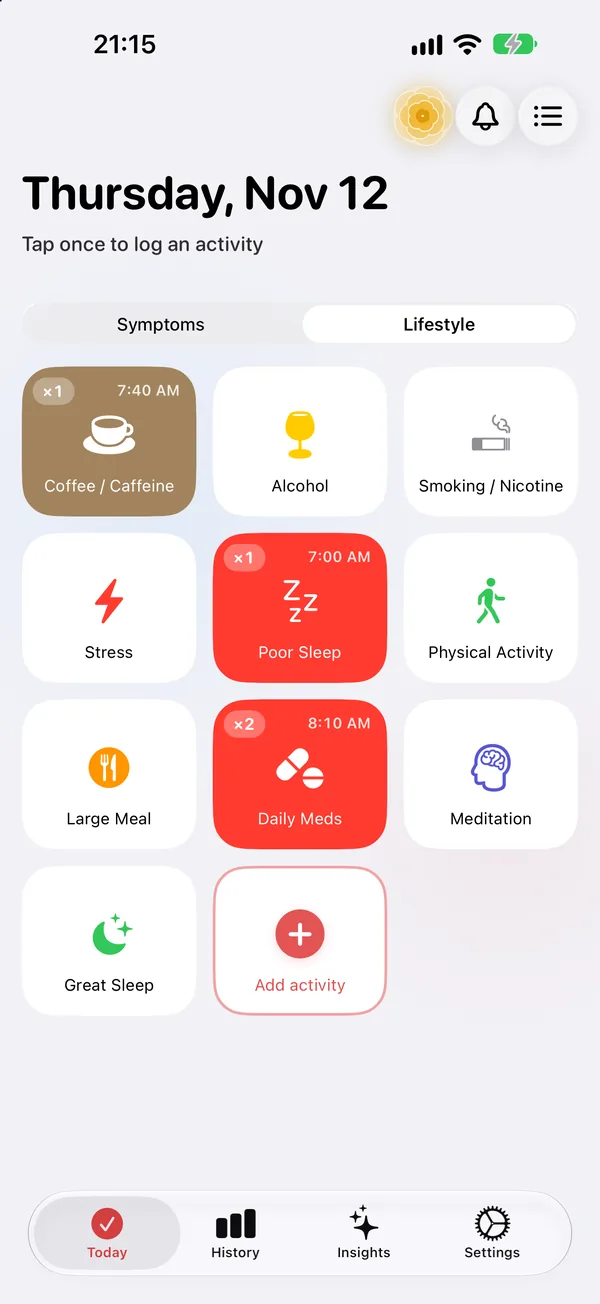
Triggers vary a great deal from person to person, which is why your own record is more useful than any general list. These are the daily factors Trace Health sets up for heart rhythm problems.
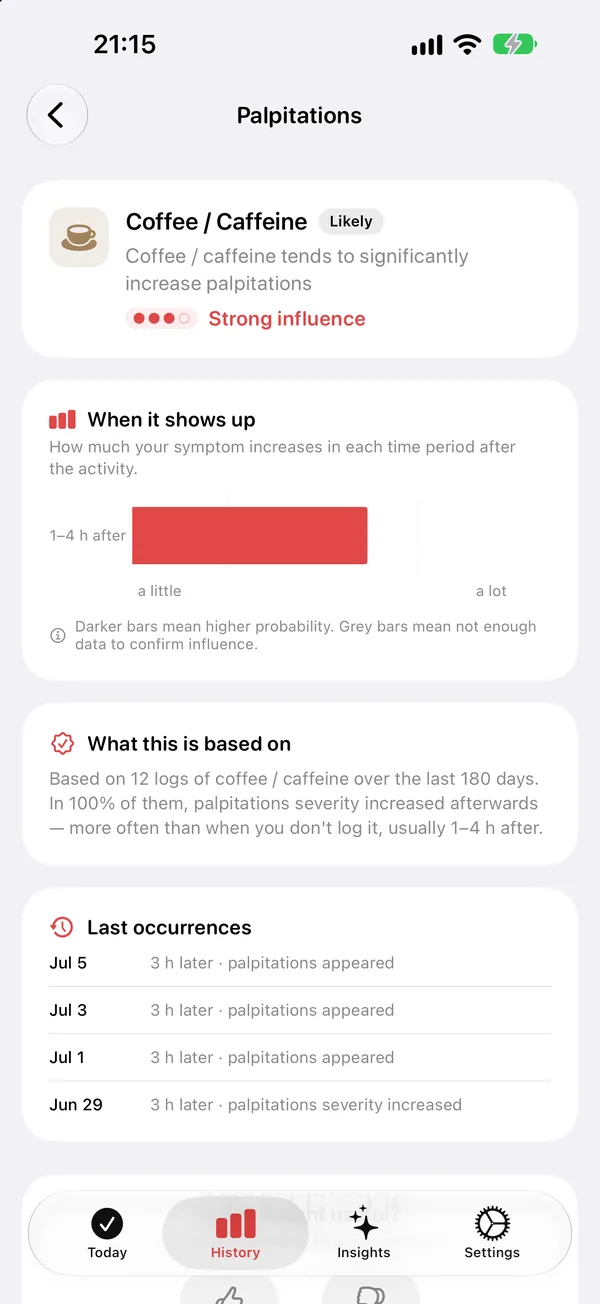
- Caffeine is often blamed, and some people notice a clear link, especially with ectopic beats. Yet for many people, moderate coffee is not linked to more episodes. Logging every cup is how you find out which group you are in, rather than giving up coffee on a guess.
- Alcohol is a well-recognised trigger for AF, particularly heavy drinking in one session, sometimes called holiday heart. Logging it shows whether episodes follow the evening or the next morning.
- Smoking and nicotine stimulate the heart and increase the risk of AF and ectopic beats. Logging use makes any link visible and gives a reason to cut down.
- Stress and Poor Sleep raise adrenaline and lower the threshold for palpitations. Sleep apnoea is also linked to AF, so persistently poor sleep with snoring is worth mentioning to your doctor.
- Physical Activity can bring on some arrhythmias and settle others. Logging it shows whether episodes start during exercise, afterwards, or at rest, which helps your cardiologist.
- Large Meal can trigger palpitations in some people, especially ectopic beats after eating, through the nerves that connect the stomach and heart.
- Daily Medications, such as beta blockers or anticoagulants, are worth logging so you can see how episodes relate to your medicine. Never stop or change them without advice.
What a symptom log adds to an ECG or heart monitor
An ECG, a 24-hour or longer Holter monitor, an event recorder or a smartwatch ECG records the electrical rhythm of your heart. What it cannot record is how you felt and what you were doing. Cardiologists rely heavily on symptom-rhythm correlation: whether the moments you felt palpitations, lightheadedness or breathlessness match what the monitor captured. If you feel a strong episode and the monitor shows a normal rhythm, that is reassuring and changes the plan. If the monitor catches AF or SVT at the exact time you logged a symptom, the link is confirmed. Either way, the timing of your entries is what makes the comparison possible.
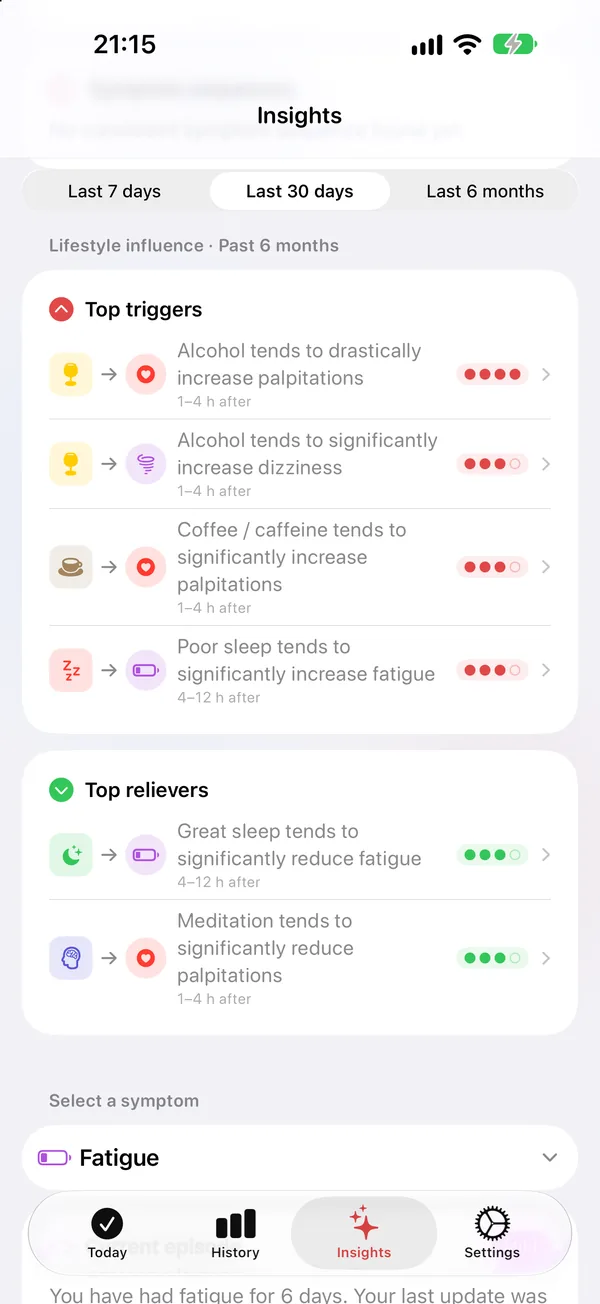
That is why time stamps matter. Trace Health records the time of every entry, and you can mark an episode gone when it stops, which records how long it lasted. While you wear a monitor, log every episode, even small ones, along with what you were doing. Between monitor periods, the log builds a longer picture: how many episodes a month, how long they last, and whether alcohol, caffeine, poor sleep or stress tends to come first.
Be clear about the boundary. Trace Health does not measure heart rate, rhythm or blood pressure, does not detect AF and does not import heart rate from Apple Health. It is a diary of symptoms and daily factors, and it works alongside the devices and tests your care team uses, not instead of them. With Premium, the Trace Health Apple Watch app lets you log a symptom on your wrist the moment it starts, which is handy if you also use the Apple Watch's own ECG app, kept separate from Trace.
Red flags, and preparing for a cardiology appointment
Call your emergency number if palpitations come with chest pain, severe breathlessness, fainting or near-fainting, or if you feel very unwell. If you have AF, learn the signs of stroke, sudden facial drooping, arm weakness or slurred speech, and call for emergency help immediately if they appear, because AF increases stroke risk. See a doctor soon if palpitations are new, are becoming more frequent or longer, happen with exercise, or if a close relative died suddenly at a young age. Book a routine appointment for occasional palpitations that last only a few seconds, which are often harmless ectopic beats but still worth checking once.
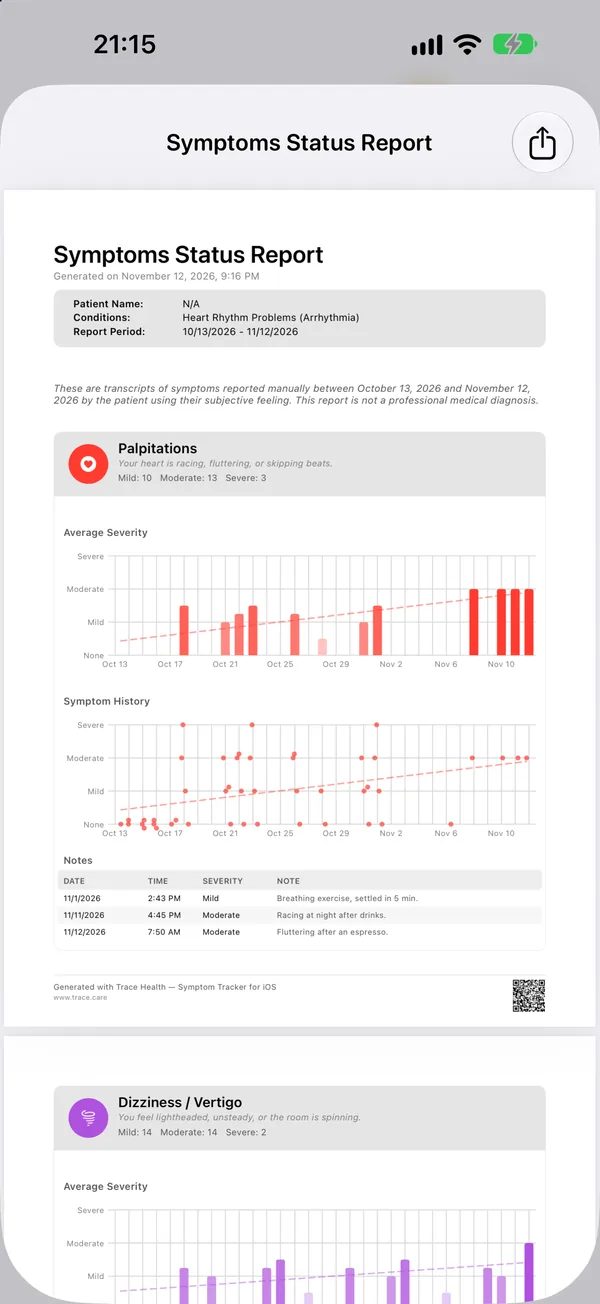
A cardiologist or GP will usually want to know when episodes started, how often they happen, how long they last, how they start and stop, what you were doing, what you felt alongside them, and which medicines you take. A doctor-ready PDF from Trace Health gathers that in one place: dated palpitations with their severity and duration, the symptoms around them, and the factors logged on the same days, such as caffeine, alcohol, smoking and daily medications. Bring any monitor results or smartwatch ECG recordings too, so the two can be compared.
After a diagnosis, the same log helps you and your care team see whether treatment is working: fewer or shorter episodes, less fatigue, and fewer days when breathlessness or dizziness held you back.
How it looks in Trace Health
Example screens with sample data, the way they look after a few weeks of tracking.
Frequently asked questions
Can Trace Health record my heart rate or detect AFib?
No. Trace Health does not measure heart rate, heart rhythm or blood pressure, does not detect atrial fibrillation and does not import heart rate from Apple Health. It is a diary of how you feel and what you do: palpitations, breathlessness, dizziness, fatigue and chest tightness with a severity and a time, next to caffeine, alcohol, smoking, stress, sleep, exercise, meals and medication. That record is what a heart monitor lacks, because cardiologists need to know whether your symptoms happened at the same time as an abnormal rhythm. Use a medical device, an ECG or your doctor's monitor for the rhythm, and Trace Health for the symptoms and triggers around it.
Does caffeine trigger palpitations?
It can in some people, but not in everyone. Many people notice ectopic beats or a pounding heart after strong coffee, energy drinks or pre-workout products, while others with arrhythmias find moderate coffee makes no difference at all. Energy drinks are often a bigger problem than coffee because they combine large doses of caffeine with other stimulants. The only way to know your own response is to log caffeine every time you have it, along with your palpitations. After a few weeks, Trace Health's Insights can show whether episodes are more common on days with more caffeine, so any change you make is based on your own pattern rather than a guess.
How do I show my cardiologist when my palpitations happen?
Log each episode in Trace Health as it starts, choose a severity, and mark it gone when it ends, which records the time and duration. Add any symptoms that came with it, such as breathlessness, dizziness or chest tightness, and log what you were doing and what came before, such as alcohol, caffeine or stress. If you are wearing a Holter monitor or event recorder, log every episode during that period, even brief ones, so the cardiologist can match your entries to the recording. Before your appointment, export a doctor-ready PDF with all of this on one timeline, and bring any smartwatch ECG recordings as well.
Is my heart symptom data private?
Your diary stays on your iPhone by default, with an optional backup to your own private iCloud. There is no Trace Health account, no sign-up, and your entries are not uploaded to a server for analysis. Trace Health does not read heart rate or other Health metrics from Apple Health. You decide if and when your diary leaves the phone, by creating a PDF report and sharing it yourself with your GP, cardiologist or anyone else you choose. Nothing is sent automatically to an insurer, employer or third party.
When are palpitations an emergency?
Call your emergency number straight away if palpitations come with chest pain or pressure, severe shortness of breath, fainting or nearly fainting, or if you feel very unwell. If you have atrial fibrillation, call for emergency help at any sign of a stroke, such as facial drooping, arm weakness or slurred speech. See a doctor promptly if palpitations are new, getting more frequent or longer, happen during exercise, or if someone in your family died suddenly at a young age. Brief, occasional skipped beats are usually harmless, but are still worth mentioning once. Trace Health is a tracking tool, not an emergency service, so never wait to log an episode before getting help.
Can I log symptoms from my Apple Watch?
Yes. Trace Health has an Apple Watch app: tap a symptom on your wrist the moment it starts, and tap again to change its severity or mark it gone. Complications keep your key symptoms on the watch face, and every log joins the same history, charts and doctor report on your iPhone. It is part of Premium and needs watchOS 11 or later.
Does Trace Health work on iPhone Duo?
Yes. Trace Health is made for iPhone Duo. Folded, you log a symptom with one hand on the cover screen. Open, your symptoms and habits sit side by side, and each symptom page shows its history and insights together.
Can I track my daily mood alongside my symptoms?
Yes. Since version 1.14, Trace Health asks once a day how you felt overall, in one tap. Your mood sits next to the symptoms and daily factors you log, and after a few weeks Trace shows what tends to lift it or weigh on it and how it moves around your symptoms. The findings are worked out with statistics on your iPhone, and your mood can sync both ways with Apple Health.
Start tracking your heart rhythm symptoms. No account needed, and your diary stays on your iPhone. Set up for heart rhythm problems in under a minute.