When Your Routine Changes: Effects on Health
A change of routine can be small, like a cancelled appointment, a different route to work or a substitute teacher, or large, like travel, holidays, a house move or a new job. Predictable days help many people manage energy, anxiety and mood. Logging days when your routine changed, next to your symptoms, shows how much those changes affect you and how long the effects last.
Health effects
Routine reduces the number of decisions and surprises in a day. When things go as expected, less mental effort is spent predicting, planning and adapting, and that saved effort is available for everything else. A change, even a welcome one, takes that effort back, and it often disrupts sleep, mealtimes and medication timing as well. For autistic people, unexpected change is one of the most commonly named causes of anxiety, meltdowns and shutdowns. The difficulty is less about the change itself than about losing predictability, which is why advance warning, visual schedules and a clear plan B often help. A long run of changes can contribute to autistic burnout. In bipolar disorder, disruption to daily rhythms is a recognised trigger for mood episodes. Late nights, travel across time zones, shift changes and irregular sleep can come before hypomania or depression, and interpersonal and social rhythm therapy is built around keeping daily routines stable for exactly this reason. Changes of routine also affect sleep, migraine and digestion in many people, through altered sleep timing, skipped meals or missed medication. The effect often appears the next day or later rather than immediately, which makes it easy to miss without a record. Only your own data shows how sensitive you are and how long the effect lasts.
Tracking with Trace Health
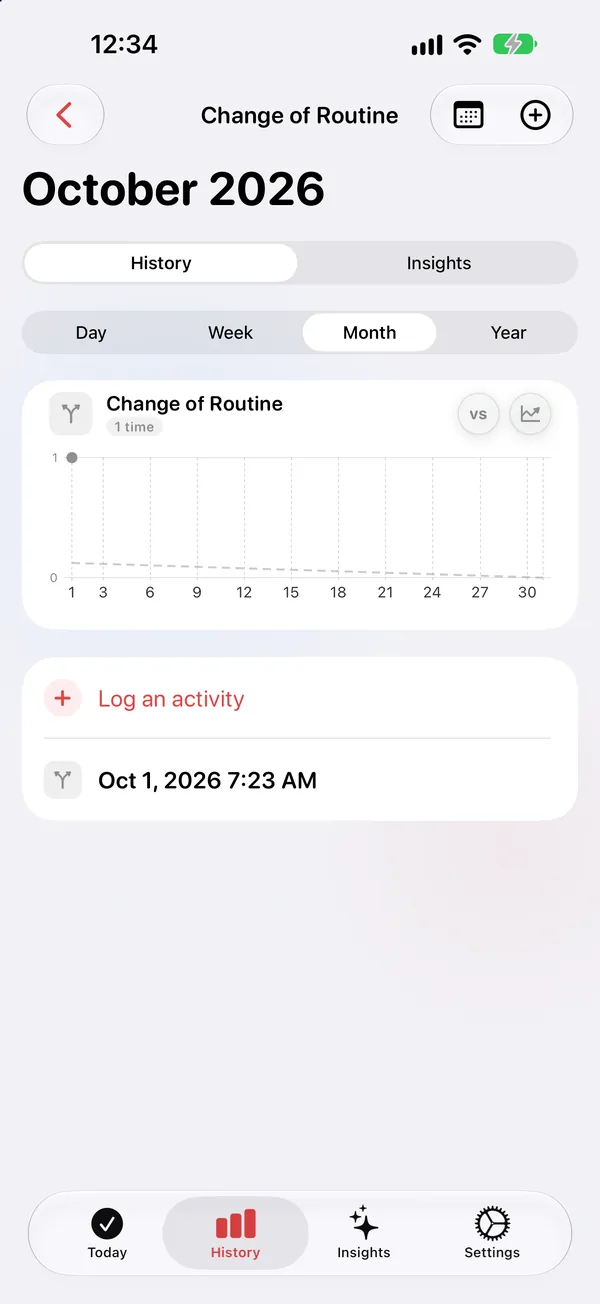
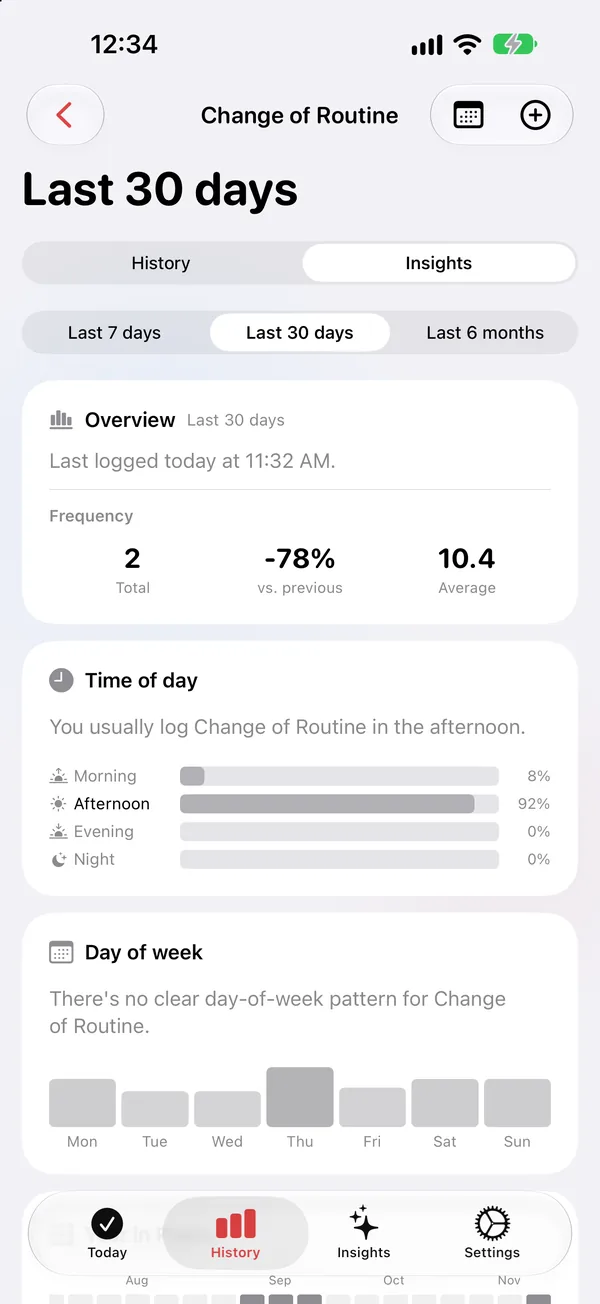
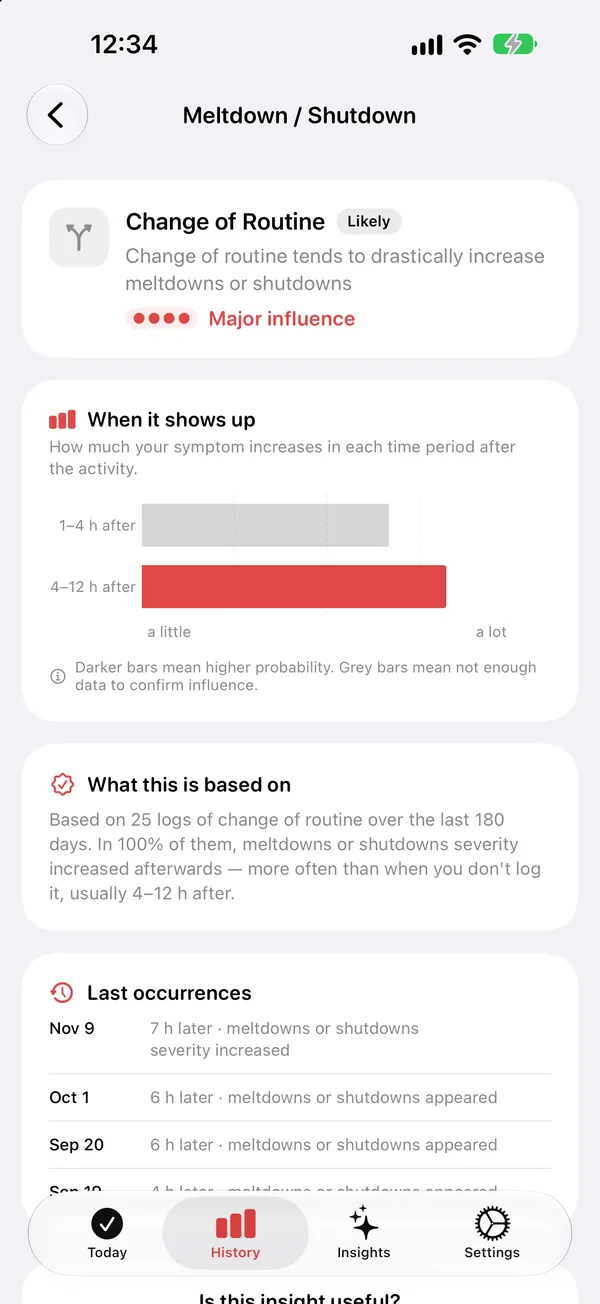
Logging days your routine changed shows whether anxiety, meltdowns, poor sleep or mood shifts follow them, and how many days later.
How it looks in Trace Health
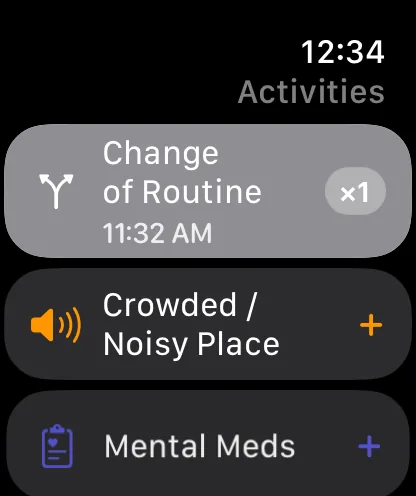
Example screens with sample data, the way they look after a few weeks of tracking.
Frequently Asked Questions
Why does a change of routine cause meltdowns in autism?
For many autistic people, predictability is what makes a demanding world manageable. Knowing what will happen, when and with whom reduces uncertainty, and uncertainty itself is tiring and anxiety-provoking. When a plan changes unexpectedly, that structure disappears, and the brain has to process a new situation on top of everything else, often at short notice. If someone is already tired or overloaded, that can be the final step towards a meltdown or shutdown. Advance warning, a clear explanation of what will happen instead, and time to adjust can make a big difference. Logging Change of Routine alongside Meltdown / Shutdown and Anxiety shows how strong the link is for you.
Can a change in routine trigger a bipolar episode?
It can contribute. Research on bipolar disorder has repeatedly linked disrupted daily rhythms, especially sleep, to the onset of mood episodes. Travel across time zones, night shifts, late nights, exam periods and major life changes are common examples. That is the basis of interpersonal and social rhythm therapy, which helps people keep regular times for waking, eating, activity and sleep. Not every change leads to an episode, and positive changes count too. Logging Change of Routine alongside Insomnia, Mania / High and Low / Depressed helps you and your care team see whether disrupted days tend to come before warning signs, which can prompt earlier action.
How do I know if routine changes are affecting my symptoms?
Log Change of Routine in Trace Health on any day when your usual pattern changed, whether it was a small disruption or a big one, and keep logging your symptoms as usual. Because the effects often appear later, look at the following one to three days as well as the day itself. Insights can show whether anxiety, meltdowns, poor sleep, headaches or mood changes are more common after changed days. You may find that some kinds of change matter more than others, such as travel or social events, which you can note in the entry. Knowing your sensitivity helps you plan buffers, such as a quiet day after travel or keeping sleep times stable.
Your health data stays on your iPhone.
No account. Private. No personal information is ever requested. Your health data stays on your iPhone by default. A backup option to your private iCloud is available. Trace Health never sells your data.
What people say
Rated 4.7 out of 5 from 81+ ratings on the App Store.
- “This app is wonderful. You can add symptoms and rearrange them as you like. The best part: your sensitive health data is only stored on your own device.” (WhoKnowsTypo, Netherlands)
- “Finally a simple iOS 26 symptom reporting app, thank you 😀” (stranack, United Kingdom)