Crowded and Noisy Places as a Sensory Load
Supermarkets, train stations, open-plan offices, concerts, school corridors and busy restaurants all combine noise, movement, light and people. For many, that is just background. For autistic people and those with ADHD, PTSD, anxiety or migraine, it is a real load on the nervous system. Logging how long you spent in such places, next to your symptoms, shows how much you can manage and what it costs.
Health effects
Crowded and noisy environments ask the brain to process and filter a large amount of input at once: overlapping voices, background music, announcements, movement at the edge of vision, bright or flickering light, smells and the chance of being touched. Filtering that input takes effort, and when the effort exceeds what the nervous system can handle at that moment, the result is sensory overload. In autism, sensory overload in busy places is one of the most common triggers for meltdowns and shutdowns, and recovery can take hours. In ADHD, noisy environments make it harder to focus and can drive irritability and exhaustion. In PTSD, crowds can trigger hypervigilance, constant scanning for threats and a heightened startle response. In anxiety disorders and panic disorder, crowded places such as public transport or queues are common settings for panic attacks. In migraine, loud noise and flickering or bright light can act as triggers, and sensitivity to them often rises before and during an attack. Noisy places can also bring on tension headaches, and people with ME/CFS or long COVID often find busy places draining well beyond the time spent there. The effect depends heavily on duration and on your state beforehand. Twenty minutes in a busy shop after a good night may be fine, while the same trip after poor sleep may tip you over. That is why logging the duration matters, and why the pattern is individual: only your own data shows where your limit sits.
Tracking with Trace Health
Logging time in crowded places with its duration shows how many minutes you can manage and how much recovery each visit costs.
How it looks in Trace Health
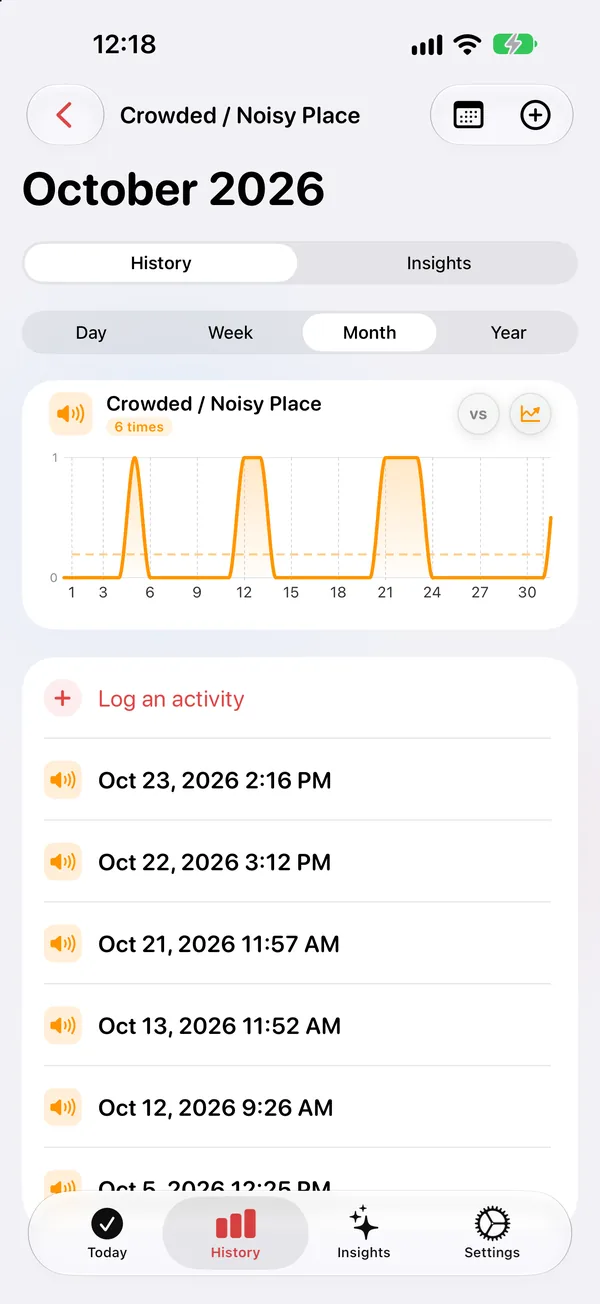
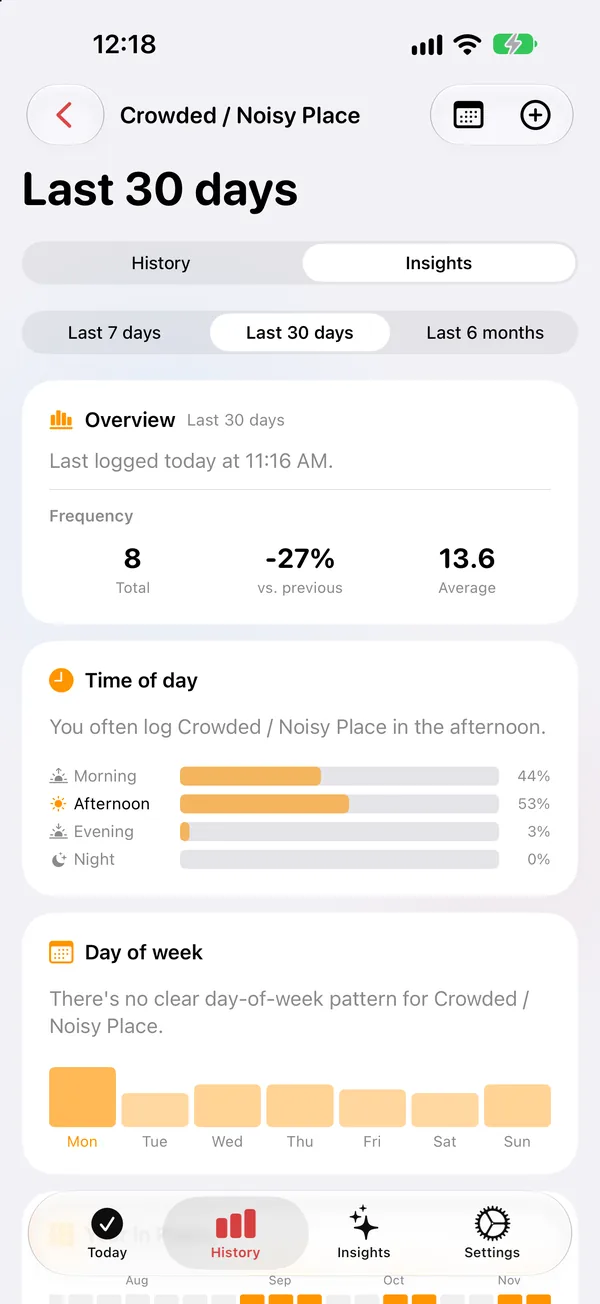
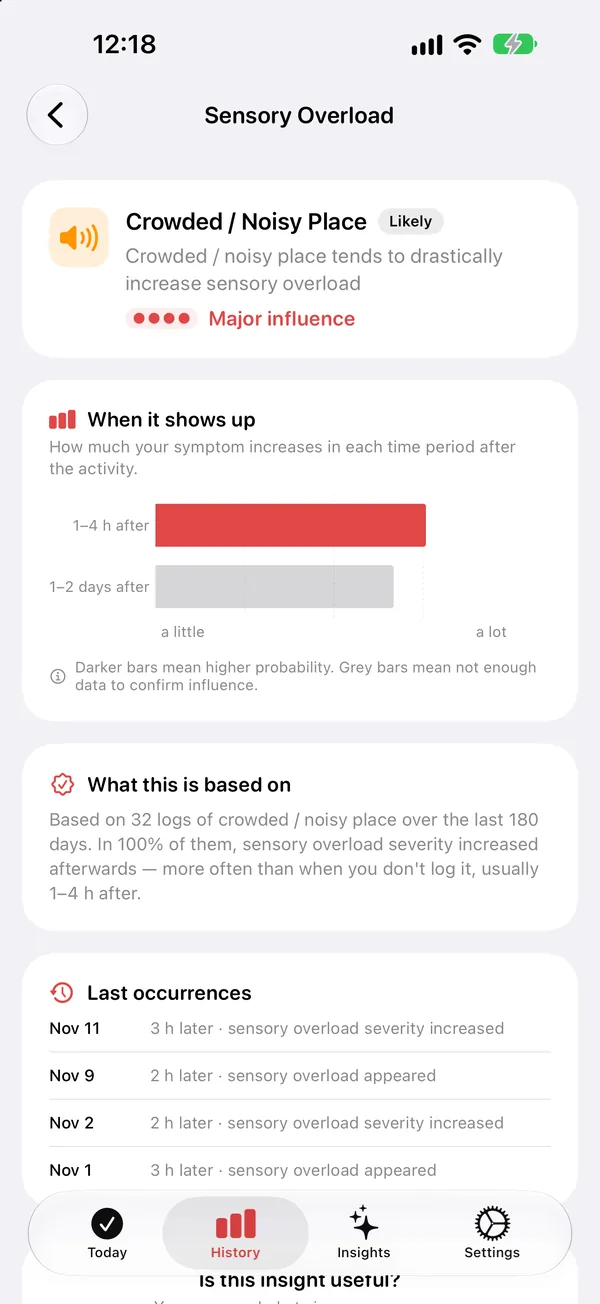
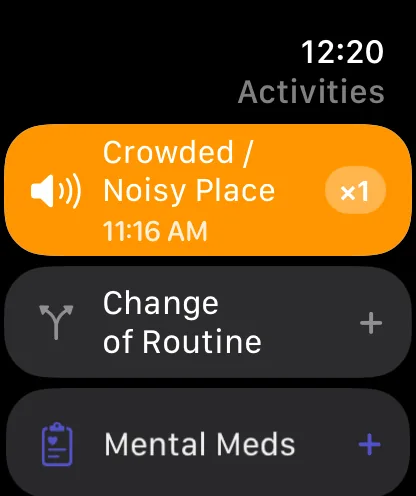
Example screens with sample data, the way they look after a few weeks of tracking.
Frequently Asked Questions
Why do crowded places make me feel overwhelmed?
Crowded places combine several kinds of input at once: overlapping noise, movement, bright lighting, smells and the possibility of being bumped into. Your brain normally filters most of that out, but filtering takes effort, and it becomes harder when you are tired, stressed, unwell or already overloaded. For autistic people and those with ADHD, the filter often works differently from the start, so overload comes sooner. In PTSD and anxiety, crowds can also feel unsafe, adding a threat response on top of the sensory load. Logging time in crowded places with its duration, alongside Sensory Overload and Anxiety, helps you see which factor matters most for you.
Can noisy places trigger a migraine?
For some people, yes. Loud noise is a commonly reported migraine trigger, along with bright or flickering light and strong smells, which busy venues often combine. Sensitivity to sound and light is also part of the migraine attack itself, and some people notice it increasing during the prodrome, hours before the headache, which can make noisy places feel unbearable as an early sign rather than a cause. Logging time in a crowded or noisy place with its duration, next to Headache, Sound Sensitivity and Light Sensitivity, helps tell those apart. If headaches often follow noisy events by a few hours, noise may be one of your triggers, especially combined with poor sleep, skipped meals or alcohol.
How can I tell if crowded places are affecting my symptoms?
Log every visit to a crowded or noisy place in Trace Health with how many minutes you were there, whether or not you felt bad afterwards. Log your symptoms as usual, especially Sensory Overload, Meltdown / Shutdown, Anxiety, Headache and Fatigue. After a few weeks, compare days with and without those visits, and look at the hours and the day after, since the effect is often delayed. Insights can show whether symptoms are more frequent or more severe after time in busy places. You may also find a duration threshold, such as being fine for thirty minutes but not for two hours, which is a practical number to plan around.
Your health data stays on your iPhone.
No account. Private. No personal information is ever requested. Your health data stays on your iPhone by default. A backup option to your private iCloud is available. Trace Health never sells your data.
What people say
Rated 4.7 out of 5 from 81+ ratings on the App Store.
- “Out of all the symptom tracker apps, I found this to be the easiest and most straightforward. It “writes” to the health app, which is exactly what I wanted. All the others only “read” parts of the health app data, and didn’t truly write any data back. This helps me visualize my chronic symptoms soooo well.” (EB1700, United States)
- “I’m not really into tracking mood and habits but this app has shown me the benefit of doing so and has helped me reflect on my day to help find the positives and see where I can improve.” (GavinLanoe, United Kingdom)